Humanize AI Text: The Student's Guide to Natural Writing

Learn how to humanize AI text for academic writing. Discover proven techniques to transform ChatGPT essays into authentic, undetectable content.
College students in 2026 face a unique challenge: AI writing tools like ChatGPT have become essential for managing academic workloads, but professors and detection systems have gotten smarter at identifying machine-generated content. The solution isn't abandoning these valuable tools but learning to humanize AI text effectively. This process transforms robotic, formulaic output into authentic writing that reflects genuine student voice while maintaining academic integrity and passing even the strictest detection systems.
Understanding Why AI Text Needs Humanization
Artificial intelligence writing tools produce content that follows predictable patterns. These systems generate text based on probability models, selecting words and phrases that statistically appear together in their training data. The result is technically correct writing that lacks the natural inconsistencies, personal touches, and unique stylistic choices that characterize human authors.
The Telltale Signs of AI-Generated Content
AI detectors and experienced professors recognize several distinctive markers. Repetitive sentence structures appear throughout AI writing, with paragraphs often following identical grammatical patterns. Overly formal vocabulary creates an unnaturally polished tone that doesn't match typical student writing. The content lacks personal anecdotes, specific examples, and authentic voice-elements that make human writing memorable and credible.
Detection systems scan for these patterns using sophisticated algorithms. According to research on understanding how AI detectors work, these tools analyze sentence-level features, vocabulary distributions, and structural consistencies that reveal machine origins.

Core Techniques to Humanize AI Text
Transforming AI output requires strategic intervention across multiple dimensions. The goal isn't simply to trick detection systems but to create genuinely better writing that sounds natural and authentic.
Vary Your Sentence Structure Deliberately
AI tends to produce sentences of similar length and complexity. Break this pattern by mixing:
Short, punchy sentences that emphasize key points (5-8 words)
Medium-length sentences for standard explanations (12-20 words)
Longer, complex sentences that connect multiple ideas (25-35 words)
Occasional fragments for emphasis or transition
This rhythmic variation mirrors natural thought patterns and creates engaging reading flow. Microsoft's guide on techniques for humanizing AI-generated writing emphasizes structural diversity as a foundational humanization strategy.
Inject Personal Voice and Perspective
Generic AI writing lacks individual perspective. To humanize AI text effectively, add:
First-person observations that reflect your actual thinking process
Specific examples from your coursework, reading, or experiences
Authentic reactions to ideas rather than neutral summaries
Questions you genuinely wondered about while researching
Honest acknowledgments of complexity or uncertainty
These elements transform abstract content into writing that reflects a real student engaging with material.
Replace Generic Vocabulary with Natural Language
AI writing often uses unnecessarily sophisticated vocabulary. Students naturally write with more conversational language while maintaining academic standards. Review your text and replace:
AI-Generated Phrase | Humanized Alternative |
|---|---|
"facilitate the process" | "make it easier" or "help with" |
"utilize" | "use" |
"aforementioned" | "this" or "the earlier" |
"in order to" | "to" |
"a multitude of" | "many" or "several" |
Natural writing prioritizes clarity over complexity. As noted in research about how ChatGPT influences communication patterns, maintaining authentic expression requires conscious vocabulary choices.
Advanced Humanization Strategies for Academic Writing
Beyond surface-level adjustments, sophisticated humanization addresses deeper structural and stylistic elements that characterize genuine student work.
Add Transitional Inconsistencies
Perfect logical flow is suspicious. Human writers sometimes jump between ideas, circle back to earlier points, or insert tangential observations. Introduce subtle inconsistencies:
Brief digressions that connect to personal experience
Recursive references that revisit earlier concepts from new angles
Imperfect transitions that feel conversational rather than mechanical
Occasional redundancy where you re-emphasize important points
These "imperfections" actually strengthen authenticity. Students working on transforming AI content to human text benefit from understanding that polish can betray machine origins.
Incorporate Research-Based Evidence Naturally
AI often cites sources in formulaic ways. Human writers integrate evidence more organically:
Instead of: "According to Smith (2024), climate change affects ecosystems. Research by Jones (2025) confirms this impact."
Try: "The ecosystem changes I've observed in my environmental science labs align with Smith's 2024 findings on climate disruption, though Jones's recent work suggests the timeline might be accelerating faster than initially predicted."
This approach weaves citations into your analytical narrative rather than treating them as isolated facts.

Embed Authentic Uncertainty and Nuance
AI writing presents information with unnatural confidence. Real students grapple with complexity. To humanize AI text in academic contexts, acknowledge:
Competing interpretations of evidence or theory
Personal difficulty understanding certain concepts initially
Ongoing scholarly debates rather than settled conclusions
Limitations in current research or your own analysis
This intellectual humility signals genuine engagement rather than regurgitated information.
Practical Workflow for Humanizing AI Essays
Students need efficient processes for transforming AI drafts into submission-ready work. Here's a systematic approach:
Generate your initial draft using ChatGPT or similar tools with detailed prompts
Read aloud to identify unnatural phrasing and rhythmic monotony
Mark repetitive patterns in sentence structure, paragraph openings, and transitions
Insert personal elements including specific examples, observations, and voice
Vary sentence length by combining short sentences and breaking long ones
Replace formal vocabulary with natural academic language
Add strategic imperfections like conversational asides or recursive points
Run through detection to identify remaining AI markers
For students concerned about bypassing Turnitin's detection systems, this comprehensive revision process addresses both surface markers and deeper structural patterns that trigger flags.
Common Mistakes When Humanizing AI Text
Even well-intentioned efforts can fail if students make these critical errors:
Over-Casualizing Academic Writing
There's a balance between natural voice and academic standards. Avoid slang, texting abbreviations, or overly informal constructions that undermine credibility. Your writing should sound like a college student having an intelligent conversation, not like a text message to a friend.
Inconsistent Voice Throughout the Essay
Humanization efforts sometimes create jarring shifts. Maintain consistent perspective and tone across sections. If you introduce first-person observations, use them throughout rather than switching between detached third-person and personal voice randomly.
Neglecting Field-Specific Conventions
Different academic disciplines have distinct writing expectations. Philosophy essays embrace first-person argumentation while lab reports maintain objective distance. Humanization must respect these conventions rather than applying one-size-fits-all changes.
The educator's guide to AI humanizers reveals that professors notice when writing violates disciplinary norms, which raises suspicion regardless of detection scores.
Tools and Technologies for Humanization
Several approaches exist for transforming AI-generated content, each with distinct advantages and limitations.
Manual Revision Techniques
The most effective humanization involves hands-on editing. This approach:
Gives you complete control over voice and style
Develops your writing skills through active engagement
Ensures authenticity because you're making genuine choices
Takes significant time that busy students may not have
Manual revision works best when you have multiple days before submission and want to improve your writing abilities.
Specialized Humanization Platforms
Dedicated tools streamline the humanization process. GenZWrite transforms AI-generated essays instantly, addressing the specific patterns that trigger academic detection systems while preserving your intended meaning and argument structure. These platforms understand the unique requirements of student writing and optimize for both authenticity and undetectability.
Hybrid Approaches
Many successful students combine methods:
Approach | Time Investment | Effectiveness | Best For |
|---|---|---|---|
Pure manual editing | 2-4 hours | High | Final papers, major assignments |
Humanization tools | 5-15 minutes | High | Time-sensitive submissions |
AI prompts + editing | 30-60 minutes | Medium | Practice and skill development |
Combined method | 45 minutes | Very High | Balanced quality and efficiency |
The optimal strategy depends on your deadline, assignment importance, and current skill level.
Understanding Detection Systems and Evasion
To effectively humanize AI text, you need to understand what you're working against. Modern detection systems employ multiple analytical layers.
How Academic Detection Works
Platforms like Turnitin analyze writing through several lenses. Perplexity measures evaluate how predictable your word choices are-AI writing shows low perplexity because it selects statistically probable words. Burstiness analysis examines sentence length variation-human writing naturally varies more than AI output.
Embedding space analysis compares your text's mathematical representation to known AI patterns. Stylometric fingerprinting identifies consistent authorial characteristics across submissions. According to research on spotting AI writing, these technical approaches increasingly replace simple pattern matching.

Why Simple Paraphrasing Fails
Students sometimes run AI text through basic paraphrasing tools, expecting this to solve detection problems. This approach fails because:
Detection analyzes structure more than individual words
Paraphrasing tools often use AI themselves, adding another layer of machine patterns
Meaning degradation occurs when synonyms replace precise terminology
Consistency breaks down as different sections receive different treatment
Effective humanization requires understanding these limitations. Students exploring how to make ChatGPT undetectable learn that structural transformation matters more than vocabulary substitution.
The Ethics and Academic Integrity Perspective
The conversation about humanizing AI text inevitably intersects with academic honesty questions. Students must navigate this complex landscape thoughtfully.
AI as a Writing Assistant vs. Author
Using AI ethically means treating it as one tool in your research and composition process. AI can help with brainstorming, outlining, and drafting, but the final submission should reflect your understanding and engagement with material. When you humanize AI text by adding personal analysis, specific examples, and authentic voice, you're transforming a starting point into genuinely your own work.
Institutional Policies and Expectations
Academic institutions in 2026 maintain varying policies. Some prohibit AI entirely, others permit it with disclosure, and many occupy ambiguous middle ground. Understanding your specific institution's guidelines is essential. Humanization techniques serve different purposes depending on context-they might help you develop skills while using AI as a learning tool, or they might enable appropriate use within permissive policies.
Developing Genuine Skills
The goal shouldn't be merely evading detection but building actual writing capabilities. Effective humanization requires:
Understanding source material deeply enough to add meaningful analysis
Developing your unique voice through conscious stylistic choices
Engaging critically with ideas rather than accepting AI summaries
Building revision skills that improve all your writing
Students who approach humanization as skill development rather than simple evasion benefit most. The techniques that help you convert AI text to human text also make you a stronger writer overall.
Field-Specific Humanization Strategies
Different academic disciplines require tailored approaches to humanizing AI text effectively.
Humanities and Social Sciences
These fields value argumentation and interpretation. To humanize AI text in essays:
Develop a clear thesis that reflects your actual position on the topic
Engage with theoretical frameworks through personal understanding, not summaries
Include interpretive nuance showing how you read primary sources
Reference class discussions or lecture points that shaped your thinking
Acknowledge scholarly debates and position yourself within them
The writing should demonstrate critical thinking about ideas, not just information compilation.
STEM and Technical Writing
Scientific writing requires precision and objectivity while still sounding human. Humanization strategies include:
Explaining methodology choices with reasoning rather than just procedures
Discussing unexpected results and your analytical process
Connecting findings to broader research questions in your own words
Describing problem-solving approaches you actually used
Including appropriate technical language from your field
Lab reports and technical papers sound more authentic when they reflect genuine experimental engagement.
Business and Professional Writing
Case analyses and business writing benefit from:
Practical application connecting theory to real-world examples
Strategic reasoning explaining why you recommend specific approaches
Data interpretation showing how you read charts and statistics
Stakeholder consideration reflecting nuanced business judgment
Industry-specific terminology used naturally, not forced
Business writing should demonstrate practical thinking, not just theoretical knowledge.
Measuring Humanization Success
How do you know if your humanization efforts have succeeded? Several indicators help assess effectiveness.
Detection Score Benchmarks
Most academic AI detectors provide percentage scores. For academic submissions:
Below 15% AI probability generally passes without flags
15-30% range might trigger review depending on institution
Above 30% typically raises concerns and requires revision
Multiple detector testing provides better confidence than single scores
Students concerned about whether their essay gets flagged by Turnitin should test with multiple systems before submission.
Qualitative Assessment Criteria
Beyond numerical scores, evaluate whether your text:
Sounds like you when read aloud in your natural speaking voice
Includes specific details that only someone who engaged with material would know
Varies naturally in rhythm, structure, and complexity
Contains minor imperfections like occasional wordiness or brief tangents
Reflects genuine thinking about the topic, not just information display
These qualitative markers often matter more than detection scores for creating truly convincing human writing.
Reader Response Testing
Have someone unfamiliar with your writing process read the final text. Their feedback reveals:
Whether voice feels authentic or artificially constructed
If examples seem genuine or generic and placeholder-like
Whether argument flows naturally or feels mechanically assembled
If vocabulary matches expected student writing for the level
Whether engagement seems real or performative
This external perspective catches issues you might miss through familiarity with your own revision process.
Advanced Prompting for More Human AI Output
Rather than humanizing robotic AI text after generation, you can improve initial output quality through sophisticated prompting techniques.
Effective Prompt Engineering
Better prompts produce more human-sounding initial drafts:
Basic prompt: "Write an essay about climate change impacts"
Humanized prompt: "Write a 5-paragraph college essay about climate change impacts on coastal ecosystems. Use a conversational but academic tone. Vary sentence length significantly. Include one specific example from recent news. Write as a college junior who's genuinely interested in environmental science but sometimes struggles with complex concepts. Avoid phrases like 'delve into' or 'multitude of.' Make it sound like a real student wrote this, including occasional slightly awkward transitions."
The specificity guides AI toward more natural output. Tom's Guide's exploration of the ChatGPT humanize prompt demonstrates how prompt engineering dramatically improves authenticity.
Iterative Refinement
Rather than accepting first-draft AI output:
Generate initial response with detailed humanization prompt
Request specific revisions ("make paragraph 3 more conversational," "add a personal example to paragraph 2")
Ask for sentence variation ("rewrite this paragraph with more varied sentence lengths")
Request vocabulary changes ("replace formal academic phrases with simpler alternatives")
Combine revised sections manually to create final draft
This collaborative approach produces better starting material for final humanization.
Time Management and Workflow Optimization
Students juggling multiple courses need efficient humanization processes that don't consume excessive time.
Quick Humanization for Urgent Deadlines
When facing tight deadlines:
Focus on the introduction and conclusion where AI patterns are most obvious
Vary sentence openings throughout (check first word of each sentence)
Add 2-3 specific personal examples in body paragraphs
Read aloud and fix obvious robotic phrasing you notice
Run quick detection check and address highest-probability paragraphs
This targeted approach addresses critical markers efficiently. Students exploring techniques to bypass ChatGPT detectors when time is limited benefit from prioritizing high-impact revisions.
Comprehensive Humanization for Major Papers
For significant assignments with adequate lead time:
Start 3-5 days before deadline to allow proper revision time
Complete full manual revision addressing all humanization dimensions
Let draft sit 24 hours then re-read with fresh perspective
Implement feedback from peers or writing center consultations
Test with multiple detectors and revise flagged sections
Final polish focusing on voice consistency and natural flow
This thorough process produces highest-quality results and develops your writing skills.
Mastering the ability to humanize AI text transforms how you approach academic writing, balancing efficiency with authenticity. The techniques covered here-from structural variation and voice development to field-specific strategies and detection system understanding-empower you to produce genuinely human-sounding work that reflects real engagement with your coursework. When deadlines loom and you need reliable results, GenZWrite provides instant humanization trusted by over 100,000 U.S. students to pass Turnitin and other detection systems while maintaining your authentic voice.

Rita Jamal
AI Content Specialist
Relateted Articles

Students Are Getting Flagged for AI… Even When They Didn’t Use It
Students are facing a new academic crisis: being accused of using AI when they actually wrote the work themselves. As AI detectors like Turnitin and GPTZero struggle with high false-positive rates, even the best students are being unfairly flagged. Learn why academic clarity triggers these algorithms, the bias against non-native speakers, and how to use an AI humanizer to protect your GPA and your reputation from flawed software.

GenZWrite
GenZWrite official
The Definitive Guide to AI Humanization in 2026: GenZWrite vs. the Top 6 Tools
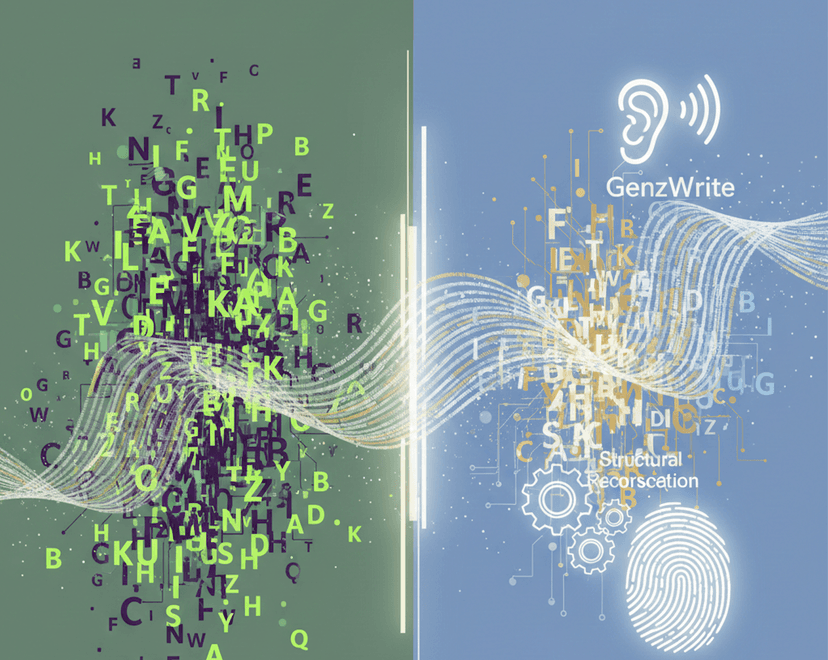
Discover the best AI humanizers of 2026. We compare GenZWrite against Phrasly, Humbot, and StealthWriter, Quillbot based on structural variety, tone control, and bypass reliability. Learn why structural reconstruction—not just synonym swapping—is the key to undetectable, professional writing this year
GenZWrite
GenZWrite official

The Best AI Humanizer for Turnitin in 2026
Turnitin doesn’t just look for "AI words"—it tracks the statistical fingerprint of your writing. In 2026, simple synonym swaps no longer work. This guide reveals the data-driven way to humanize your essays, bypass "burstiness" checks, and protect your academic reputation with tools that actually work.
GenZWrite
GenZWrite official
Humanize & Detect AI
Transform robotic AI text into natural, engaging content that passes detection and ranks higher.