How to Bypass Turnitin in 2026: A Student's Guide

Discover effective strategies to bypass Turnitin AI detection in 2026. Learn what works, what doesn't, and how to submit essays with confidence.
Academic technology has evolved dramatically, and Turnitin's AI detection capabilities have become significantly more sophisticated in 2026. Students using AI writing tools face increasing scrutiny as universities worldwide integrate advanced plagiarism and AI detection systems. Understanding how these systems work and what strategies genuinely help students submit original-sounding work has become essential for academic success. This guide examines practical approaches that students are using to navigate Turnitin's detection mechanisms while maintaining academic integrity and producing quality work.
Understanding Turnitin's Detection Technology
Turnitin's AI detection system in 2026 operates through multiple layers of analysis that examine text patterns, sentence structures, and linguistic fingerprints. The platform analyzes billions of academic papers, web content, and known AI-generated text samples to identify similarities and patterns.
The system assigns a similarity score and an AI writing indicator based on several factors:
- Sentence structure consistency and variation
- Vocabulary complexity and diversity
- Transition word usage patterns
- Paragraph organization and flow
- Stylistic consistency throughout the document
Detection accuracy has improved substantially, but the technology isn't infallible. Turnitin's algorithms struggle with certain writing styles and can produce false positives, particularly when students write in straightforward, clear prose. Recent studies show that detection algorithms face inherent challenges in distinguishing between certain types of content.
How Turnitin Flags AI-Generated Content
The platform examines statistical anomalies in writing that typically appear in AI-generated text. Machine learning models produce content with predictable patterns that human writers naturally avoid. These include:
| Detection Factor | What Turnitin Analyzes | Why It Matters |
|---|---|---|
| Perplexity | Text predictability and variation | Low perplexity indicates AI patterns |
| Burstiness | Sentence length variation | AI tends toward uniform sentence length |
| Lexical Diversity | Vocabulary range and repetition | AI often repeats similar word choices |
| Coherence Markers | Transition and connector usage | AI overuses specific transitional phrases |
Understanding these metrics helps students recognize what triggers detection flags. Many students wonder how professors spot AI essays beyond just using Turnitin, combining automated detection with manual review of suspicious patterns.

Why Students Seek to Bypass Turnitin
The motivation to bypass Turnitin stems from multiple legitimate academic pressures facing students in 2026. Understanding these pressures provides context for why students explore alternative submission strategies.
Academic Pressure and Time Constraints
College students manage unprecedented workloads with multiple assignments, part-time jobs, internships, and personal commitments. AI writing tools offer efficiency when deadlines collide, but submission systems create additional stress.
Students face several challenges:
- Multiple simultaneous deadlines requiring rapid content production
- Complex research assignments needing quick synthesis of information
- Language barriers for international students writing in non-native languages
- Learning disabilities making traditional writing processes more challenging
False Positive Concerns
Turnitin's AI detection occasionally flags entirely human-written work, creating anxiety among students who write clearly and directly. This issue has become more prominent as AI detectors falsely accuse honest students with increasing frequency.
The consequences of false positives include academic integrity investigations, grade penalties, and damaged academic records. These stakes drive students to seek methods ensuring their work passes detection, regardless of whether they used AI assistance.
Common Methods Students Use to Bypass Turnitin
Students employ various strategies attempting to bypass Turnitin detection, with widely different success rates. Understanding what actually works versus what creates additional problems helps students make informed decisions.
Manual Rewriting and Paraphrasing
The most traditional approach involves manually rewriting AI-generated content paragraph by paragraph. This method requires significant time investment but produces the most natural results.
Effective manual rewriting includes:
- Reading AI-generated content completely
- Closing the original text
- Writing each section in your own words from memory
- Adding personal examples and insights
- Reviewing for natural flow and voice consistency
This approach works but defeats the time-saving purpose of using AI tools initially. Students typically spend 60-80% of the time they would have spent writing from scratch.
Strategic Prompting Techniques
Advanced ChatGPT users employ specific prompting strategies designed to generate more human-like text. These prompts for human-sounding AI writing include instructions for varied sentence structure, personal tone, and informal language patterns.
However, Turnitin's 2026 algorithms detect these patterns increasingly effectively. Simple prompt engineering no longer reliably produces undetectable content.
Word-Level Substitution Methods
Some students attempt bypassing detection through systematic word replacement, substituting synonyms throughout AI-generated text. This outdated technique produces awkward, unnatural writing that both Turnitin and human readers easily identify.
Why this method fails:
- Creates unnatural vocabulary choices
- Disrupts contextual meaning
- Maintains AI sentence structure patterns
- Often introduces grammatical errors
- Doesn't address stylistic consistency issues

Advanced Humanization Technologies
The most effective approach to bypass Turnitin in 2026 involves specialized humanization technology that restructures content at fundamental levels. These tools analyze and transform AI writing patterns into natural human variation.
How Humanization Tools Work
Modern humanization platforms employ sophisticated algorithms that go beyond simple paraphrasing. They analyze text across multiple dimensions and reconstruct it with natural human variation patterns.
The process includes:
- Structural analysis identifying AI-typical patterns
- Sentence reconstruction creating natural length variation
- Vocabulary diversification introducing contextual word choice
- Stylistic personalization matching individual writing voices
- Flow optimization ensuring natural paragraph transitions
GenZWrite specializes in this transformation process, helping students convert AI-generated essays into naturally human-sounding content that passes Turnitin's detection algorithms consistently. The platform processes text through multiple layers of humanization, addressing each factor that triggers AI detection.
Comparison of Humanization Approaches
| Method | Time Required | Success Rate | Natural Sound | Maintains Meaning |
|---|---|---|---|---|
| Manual Rewriting | 3-4 hours | 95% | Excellent | Excellent |
| Prompt Engineering | 1-2 hours | 40% | Good | Good |
| Synonym Replacement | 30 minutes | 15% | Poor | Fair |
| Advanced Humanization | 5-10 minutes | 90% | Excellent | Excellent |
Students increasingly recognize that effective humanization requires more than surface-level changes. The technology must understand context, maintain academic tone, and introduce natural variation without compromising content quality.
Best Practices for Undetectable Submissions
Successfully submitting essays that bypass Turnitin requires strategic approaches combining technology, personal input, and quality control measures. These practices help students maintain academic standards while managing workload pressures.
Start with Quality AI Input
The foundation of undetectable content begins with well-prompted AI generation. Students should provide detailed instructions, specific examples, and contextual information when using ChatGPT or similar tools.
Effective initial prompting:
- Include assignment requirements and rubric details
- Specify desired tone and formality level
- Request specific examples or case studies
- Ask for varied sentence structures
- Indicate personal perspective preferences
Better initial AI output requires less extensive humanization, producing more natural final results.
Add Personal Voice and Examples
Humanized content becomes truly undetectable when students inject personal perspective, unique examples, and individual insights. This personalization creates authentic voice markers that detection algorithms recognize as human characteristics.
Students should integrate their own experiences, class discussion references, and specific observations from course materials. These details create contextual authenticity that AI cannot replicate.
Layer Multiple Techniques
The most successful students combine several approaches rather than relying on single methods. This layered strategy addresses different detection vectors simultaneously.
A comprehensive approach includes:
- Using humanization technology for structural transformation
- Adding personal examples and insights
- Adjusting tone to match previous writing samples
- Incorporating class-specific terminology and concepts
- Reviewing for natural flow and readability
Test Before Submission
Students should always verify their work before submitting through Turnitin. Multiple AI detector tools are available for pre-submission checking, though none perfectly replicate Turnitin's algorithms.
Testing helps identify remaining AI patterns and provides opportunities for final adjustments. Students can review sections flagged by detectors and apply additional humanization where needed.

Understanding the Risks and Ethics
Navigating AI writing tools and detection systems raises important ethical considerations that students should understand. The academic landscape in 2026 continues evolving, with institutions developing varied policies regarding AI assistance.
Institutional Policies on AI Writing
Universities have adopted diverse approaches to AI-generated content, ranging from complete prohibition to conditional acceptance with proper attribution. Students must understand their specific institution's policies before using AI writing assistance.
Most universities distinguish between AI as a research tool versus AI as a writing replacement. Using ChatGPT for brainstorming, outlining, or research assistance typically receives different treatment than submitting AI-generated essays directly.
Academic Integrity Boundaries
The concept of academic integrity in the AI era remains complex and contested. Students should consider where their institution draws boundaries between acceptable assistance and academic dishonesty.
Key ethical questions include:
- Is AI assistance comparable to tutoring or editing services?
- Does humanizing AI content constitute original work?
- Where does collaboration end and cheating begin?
- How much AI assistance crosses institutional guidelines?
These questions lack universal answers, varying significantly across institutions, disciplines, and individual instructors. Students benefit from understanding their specific academic environment's expectations.
Consequences of Detection
Students caught submitting flagged content face serious academic consequences ranging from assignment failure to expulsion. Understanding these risks helps students make informed decisions about their approaches to assignments.
The stakes have increased as students get flagged for AI false positives more frequently, creating challenging situations even for students who followed institutional guidelines.
Alternative Approaches to Academic Success
Beyond attempting to bypass Turnitin, students have multiple strategies for managing academic workload while maintaining integrity and learning outcomes. These alternatives address the underlying pressures driving AI usage without creating detection risks.
Leveraging AI for Learning Enhancement
Students can use AI tools ethically for learning support rather than content generation. This approach satisfies educational objectives while reducing workload stress.
Productive AI applications include:
- Explaining complex concepts in accessible language
- Generating practice problems and examples
- Creating study guides from lecture materials
- Brainstorming essay structures and arguments
- Identifying research sources and references
These uses enhance learning without replacing the writing process itself, keeping students within most institutional guidelines.
Time Management and Planning
Many students turn to AI writing assistance due to poor planning and time management. Developing organizational skills reduces pressure and makes traditional writing approaches more feasible.
Effective strategies include breaking large assignments into smaller milestones, starting research early, creating detailed outlines before writing, and scheduling dedicated writing sessions. These practices reduce last-minute pressure that drives students toward AI content generation.
Seeking Legitimate Academic Support
Universities offer extensive support services that students underutilize. Writing centers, tutoring programs, office hours, and peer review groups provide legitimate assistance without detection risks.
These resources help students improve writing skills while completing assignments. Unlike AI tools, they build long-term capabilities that benefit students throughout their academic and professional careers.
Technical Considerations for Success
Students using humanization tools to bypass Turnitin need to understand technical factors affecting detection outcomes. These considerations help optimize results and minimize detection risks.
File Format and Submission Methods
Turnitin analyzes content differently based on submission format. Students should submit documents in formats that preserve natural formatting and avoid triggering technical detection flags.
Standard Word documents (.docx) generally produce the most reliable results. PDF submissions sometimes create scanning artifacts that algorithms interpret as suspicious patterns. Plain text formats lose formatting cues that contribute to natural appearance.
Timing and Version Control
Submitting multiple drafts or revisions through Turnitin creates comparison opportunities that may reveal humanization patterns. Students should ensure their final version represents their intended submission without multiple similar variants in the system.
Early submissions for draft feedback should match the style and approach of planned final submissions to avoid creating detectable inconsistencies between versions.
Metadata and Document Properties
Document metadata sometimes contains information revealing AI usage or multiple editing sources. Students should review and clean document properties before submission, removing author history, editing timestamps, and application identifiers that might suggest automated processing.
Most humanization tools automatically handle metadata cleaning, but students should verify this feature is active and functioning correctly.
Staying Current with Detection Technology
Turnitin's detection capabilities evolve continuously, requiring students to stay informed about current effectiveness of various bypass methods. What works in early 2026 may become obsolete by year's end.
Monitoring Academic Technology Trends
Students benefit from following developments in both AI writing technology and detection systems. Academic technology publications, student forums, and educational technology news sources provide insights into emerging capabilities and vulnerabilities.
Understanding how AI detectors work helps students anticipate detection method changes and adapt strategies accordingly.
Evaluating Humanization Tool Effectiveness
Not all humanization platforms deliver equivalent results. Students should research current effectiveness of AI humanizer tools through user reviews, comparison testing, and success rate data.
Regular evaluation ensures students use the most reliable tools available rather than outdated or ineffective services that waste time and money while increasing detection risk.
Adapting to Platform Updates
Both AI writing tools and detection systems release regular updates that shift the effectiveness landscape. Students should monitor when major platforms update their algorithms and adjust approaches accordingly.
Turnitin typically announces major detection updates through institutional channels, giving students advance notice to modify their strategies or reconsider AI usage for upcoming assignments.
Building Long-Term Academic Skills
While successfully managing to bypass Turnitin solves immediate submission challenges, students should simultaneously develop genuine writing capabilities that serve long-term academic and career goals.
Developing Authentic Writing Voice
Students who rely exclusively on humanized AI content miss opportunities to develop personal writing style and voice. These capabilities become increasingly valuable in advanced coursework and professional contexts where AI assistance is unavailable or inappropriate.
Practicing writing without AI assistance on lower-stakes assignments builds skills that make future work easier and more authentic. Students can explore tone and writing style development to strengthen their natural abilities.
Critical Thinking and Analysis
The process of researching, analyzing, and synthesizing information develops critical thinking skills that AI tools cannot replicate. Students who outsource these processes entirely to AI miss fundamental educational objectives.
Balancing AI assistance with genuine intellectual engagement ensures students gain knowledge and capabilities their degrees are supposed to certify, not just completed assignments.
Professional Preparation
Most professional contexts expect employees to produce original written content without AI generation. Students who never develop these capabilities face challenges in internships, job applications, and early-career positions.
Building genuine writing skills alongside strategic AI usage creates the best preparation for post-graduation success.
Successfully navigating Turnitin's detection systems in 2026 requires understanding both the technology involved and the broader academic context surrounding AI writing assistance. Students face legitimate pressures that drive them toward AI tools, but must balance immediate needs with long-term skill development and ethical considerations. GenZWrite helps students transform AI-generated content into naturally human-sounding essays that pass Turnitin detection while maintaining quality and meeting academic standards, providing a reliable solution for the 100,000+ students who trust the platform for their submission needs.

Rita Jamal
AI Content Specialist
Relateted Articles

Students Are Getting Flagged for AI… Even When They Didn’t Use It
Students are facing a new academic crisis: being accused of using AI when they actually wrote the work themselves. As AI detectors like Turnitin and GPTZero struggle with high false-positive rates, even the best students are being unfairly flagged. Learn why academic clarity triggers these algorithms, the bias against non-native speakers, and how to use an AI humanizer to protect your GPA and your reputation from flawed software.

GenZWrite
GenZWrite official
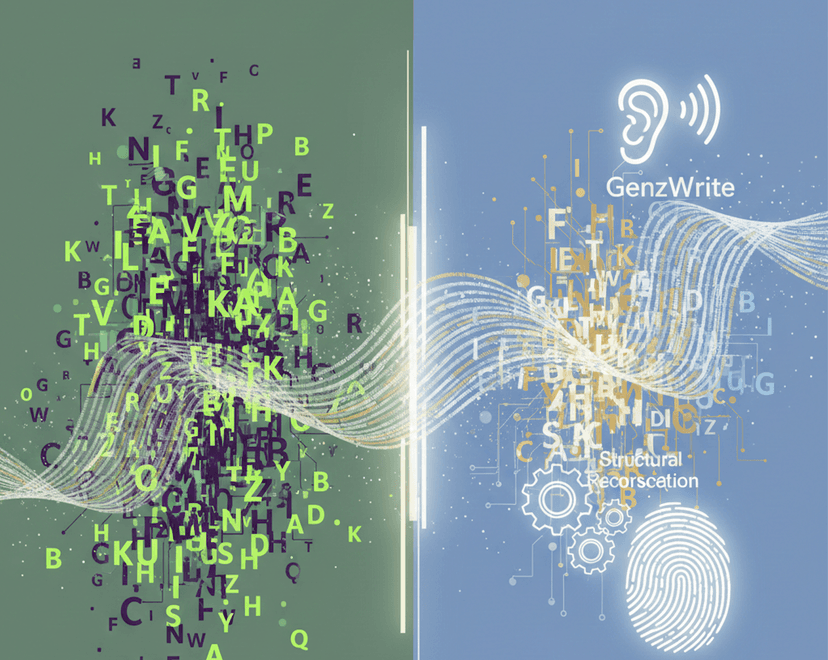
The Definitive Guide to AI Humanization in 2026: GenZWrite vs. the Top 6 Tools
Discover the best AI humanizers of 2026. We compare GenZWrite against Phrasly, Humbot, and StealthWriter, Quillbot based on structural variety, tone control, and bypass reliability. Learn why structural reconstruction—not just synonym swapping—is the key to undetectable, professional writing this year
GenZWrite
GenZWrite official

The Best AI Humanizer for Turnitin in 2026
Turnitin doesn’t just look for "AI words"—it tracks the statistical fingerprint of your writing. In 2026, simple synonym swaps no longer work. This guide reveals the data-driven way to humanize your essays, bypass "burstiness" checks, and protect your academic reputation with tools that actually work.
GenZWrite
GenZWrite official
Humanize & Detect AI
Transform robotic AI text into natural, engaging content that passes detection and ranks higher.