AI Content to Human: Transform Generated Text Naturally

Learn proven methods to convert AI content to human-quality writing. Essential techniques for students to bypass AI detectors and create authentic work.
The ability to transform ai content to human writing has become essential for college students navigating modern academic requirements. As AI writing tools like ChatGPT, Claude, and Gemini become commonplace in essay creation, understanding how to convert machine-generated text into authentic, natural-sounding work is more critical than ever. Students face sophisticated AI detection systems that flag robotic patterns, yet they also need efficient writing assistance to meet demanding deadlines. This comprehensive guide explores professional techniques to humanize AI-generated content while maintaining academic integrity and creating submissions that reflect genuine student voice.
Understanding the AI Content to Human Challenge
Converting ai content to human writing requires more than surface-level edits. Modern AI detection tools use sophisticated pattern analysis and machine learning algorithms to identify synthetic text characteristics that distinguish computer-generated content from human authorship.
Why AI Content Sounds Robotic
AI writing models generate text through pattern prediction, creating statistically probable word sequences rather than authentic human thought processes. This fundamental difference produces several telltale markers that experienced professors and detection systems recognize immediately.
Common AI writing patterns include:
- Repetitive sentence structures that follow predictable rhythms
- Overuse of transition phrases like "furthermore," "moreover," and "in conclusion"
- Unnaturally balanced paragraph lengths with similar word counts
- Generic examples lacking personal context or specific details
- Vocabulary choices that feel technically correct but emotionally flat
The mechanical nature of AI text generation creates what linguists call "statistical uniformity." Unlike human writers who naturally vary their rhythm, inject personal quirks, and occasionally break grammatical conventions for emphasis, AI maintains consistency that becomes predictable across extended passages.

The Stakes for Student Writers
Academic institutions implemented stricter policies regarding AI-generated submissions throughout 2025 and 2026. Students caught submitting unmodified AI content face consequences ranging from grade penalties to academic probation. Yet the reality remains that ChatGPT and similar tools serve as valuable research assistants when used appropriately.
The challenge becomes transforming ai content to human quality while preserving the efficiency benefits these tools provide. Students need approaches that convert AI-generated drafts into authentic work that reflects their individual voice, academic growth, and personal insights.
Techniques for Converting AI Content to Human Writing
Successfully transforming ai content to human text requires deliberate editing strategies that address both surface-level markers and deeper structural issues. These methods work across different AI writing platforms and academic formats.
Pattern Disruption Methods
Breaking AI's predictable patterns creates immediate improvements in text authenticity. Start by identifying repetitive structures within your draft-look for sentences that begin similarly or follow identical grammatical constructions.
- Vary sentence openings by starting with dependent clauses, prepositional phrases, or action verbs rather than subject-first constructions
- Mix sentence lengths deliberately, combining short punchy statements with longer, more complex thoughts
- Introduce intentional fragments for emphasis where appropriate in casual academic writing
- Replace generic transitions with conversational connectors that reflect natural thought progression
- Add contractions selectively to mirror how students actually write in less formal assignments
These adjustments combat the statistical uniformity that flags content as AI-generated. The goal is creating rhythm variation that mirrors authentic human composition rather than algorithmic prediction.
Voice Injection Strategies
Adding genuine personal voice transforms ai content to human quality more effectively than any other single technique. This process requires inserting yourself-your perspectives, experiences, and authentic reactions-into the framework AI has provided.
| Voice Element | AI Typical Approach | Humanized Version |
|---|---|---|
| Examples | Generic, textbook-style | Specific, personally relevant |
| Tone | Neutral, formal | Conversational with academic foundation |
| Perspective | Third-person distance | First-person engagement where appropriate |
| Detail Level | Broad generalizations | Concrete specifics with context |
Consider how you would explain the topic to a classmate over coffee. That conversational foundation-while maintaining academic standards-creates authenticity AI cannot replicate. Understanding tone and writing style variations helps students identify where their natural voice differs from machine-generated text.
Specificity Enhancement
AI writing tends toward abstraction because it lacks real-world experience. Converting ai content to human quality demands replacing vague statements with concrete details, specific examples, and personal connections to course material.
Transformation process:
- Replace "many students struggle with time management" with "juggling three midterms, two part-time shifts, and club meetings leaves most sophomores scrambling"
- Change "historical events shaped modern policy" to "the 1965 Voting Rights Act directly influenced how districts draw boundaries today"
- Convert "technology impacts society" into "TikTok's algorithm changed how Generation Z consumes news compared to millennials reading Twitter threads"
Each specific detail grounds your writing in authentic knowledge rather than generic AI observations. This specificity serves dual purposes-it makes professors less likely to suspect AI generation while demonstrating genuine engagement with course concepts.

Advanced Editing for Undetectable Results
Taking ai content to human quality at the highest level requires understanding what comprehensive AI content humanization entails beyond basic editing. Professional-grade transformation addresses deeper structural elements that sophisticated detection systems analyze.
Logical Flow Reconstruction
AI often creates technically coherent paragraphs that lack authentic argumentative progression. Human writers build ideas organically, sometimes circling back to earlier points, acknowledging counterarguments mid-stream, or introducing tangential thoughts before returning to the main thread.
Reconstructing logical flow means disrupting AI's too-perfect organization. Add transitional paragraphs that acknowledge complexity. Insert brief counterpoint considerations. Allow your argument to develop naturally rather than following the rigid intro-body-conclusion formula AI defaults toward.
Embedding Research Naturally
When AI integrates sources, it typically does so mechanically-quote, citation, next point. Human writers interweave research more organically, using sources to support arguments already in progress rather than building arguments around sources.
Natural research integration:
- Start with your own claim or observation
- Introduce supporting evidence as reinforcement
- Analyze the source material in your own words
- Connect back to your broader argument
- Use varied citation placement-not always at sentence end
This approach transforms ai content to human academic writing that demonstrates genuine scholarly engagement rather than sophisticated plagiarism assembly.
Emotional Resonance and Stakes
Academic writing shouldn't be emotionless, yet AI defaults toward neutral tone regardless of topic significance. Adding appropriate emotional resonance-whether cautious optimism about research findings, measured concern about social issues, or intellectual excitement about theoretical implications-creates authenticity detection systems cannot easily replicate.
Consider what genuinely interests you about the topic. That enthusiasm, even in formal academic contexts, distinguishes human scholarship from machine-generated content. Students writing about subjects they care about naturally inject stakes and significance that AI cannot fabricate convincingly.
Tools and Technologies Supporting Humanization
While manual editing remains most effective for transforming ai content to human quality, specialized tools can accelerate the process when used strategically. Understanding these technologies helps students work more efficiently without compromising authenticity.
AI Humanizer Platforms
Dedicated humanization services apply sophisticated algorithms designed to eliminate AI detection markers while preserving content meaning. These platforms analyze text for statistical patterns, repetitive structures, and vocabulary choices that flag as machine-generated.
For students specifically, GenZWrite provides targeted solutions for academic writing. The platform helps transform ChatGPT-generated essays into natural student voice while maintaining the efficiency benefits AI tools provide. This approach addresses the practical reality that students use AI assistance while ensuring submissions reflect authentic work.
The effectiveness of such tools depends on understanding how they function and using them as part of a broader revision strategy rather than as single-solution fixes.
Detection System Understanding
Converting ai content to human quality requires understanding what you're working against. Modern detection systems like Turnitin, GPTZero, and Originality.AI analyze multiple dimensions simultaneously-not just vocabulary but sentence structure variation, punctuation patterns, and semantic consistency.
| Detection Method | What It Analyzes | Humanization Counter-Strategy |
|---|---|---|
| Perplexity scoring | Predictability of word choices | Introduce unexpected vocabulary and phrasing |
| Burstiness analysis | Sentence length variation | Create intentional rhythm irregularity |
| Semantic coherence | Topic consistency across passages | Allow natural tangents and refinements |
| N-gram patterns | Common phrase sequences | Break up standard academic formulations |
Understanding these detection methodologies helps students edit strategically rather than randomly, focusing efforts on the markers most likely to trigger flags.
Manual Review Best Practices
Technology supports but cannot replace human judgment in transforming ai content to human writing. Effective manual review follows systematic approaches that address both macro and micro elements.
Three-pass editing system:
- First pass: Focus on voice and tone-does this sound like you?
- Second pass: Check structural variation-are patterns too predictable?
- Third pass: Verify specificity-could only you have written these examples?
Reading your work aloud reveals awkward phrasing and unnatural rhythm that silent reading misses. If sentences sound like they came from a textbook rather than a student essay, additional humanization work remains necessary.

Common Pitfalls When Converting AI Content
Students attempting to transform ai content to human writing frequently encounter specific challenges that undermine their efforts. Recognizing these common mistakes prevents wasted revision time and ineffective editing.
Over-Editing and Loss of Coherence
Aggressive editing sometimes destroys the logical flow that made AI-generated content useful initially. Students focused on eliminating every potential detection marker may inadvertently create disjointed arguments that raise different red flags.
The balance involves preserving structural coherence while introducing authentic voice elements. Think of AI output as a strong outline that requires personalization rather than random text requiring complete reconstruction.
Inconsistent Voice Throughout
Converting ai content to human quality demands maintaining consistent voice across the entire document. Students sometimes humanize introductions and conclusions while leaving body paragraphs in robotic AI style, creating jarring transitions that actually increase detection likelihood.
Establish your target voice early and apply it systematically. If you choose conversational-academic tone for opening paragraphs, maintain that balance throughout. Inconsistency signals revision rather than original composition.
Insufficient Personal Integration
Simply changing words while maintaining AI's fundamental structure and examples produces superficial humanization that sophisticated systems detect. Genuine transformation requires injecting personal perspective and authentic engagement with course material.
Ask yourself: Could another student submit nearly identical work by using the same AI prompts? If yes, insufficient personalization exists. Your essay should reflect your specific understanding, course discussions you attended, and connections you made independently.
Neglecting Format and Citation Style
AI writing tools sometimes introduce subtle formatting inconsistencies or citation errors that human writers wouldn't make. These technical markers-inconsistent spacing, unusual punctuation patterns, or citation format mixing-signal AI generation even when text content seems human.
Review formatting with equal attention to content. Ensure citation styles match exactly what you'd produce manually. Small technical details contribute significantly to overall authenticity assessment.
Strategic Approaches for Different Academic Contexts
Converting ai content to human writing requires different strategies depending on assignment type, academic level, and disciplinary expectations. Understanding these contextual variations improves humanization effectiveness.
Essay Types and Humanization Needs
Argumentative essays demand different humanization than analytical papers or personal reflections. Research-heavy assignments require careful source integration while opinion pieces need stronger voice projection.
Discipline-specific considerations:
- STEM papers: Focus on methodology explanation and results interpretation personalization
- Humanities essays: Emphasize analytical voice and interpretive perspective uniqueness
- Social sciences: Balance data presentation with theoretical application specificity
- Business writing: Inject practical examples and professional experience connections
Tailoring your humanization approach to assignment expectations creates more authentic results than generic editing strategies.
Time Management and Deadline Pressures
Students often turn to AI writing assistance during deadline crunches, making efficient ai content to human conversion essential. Strategic workflows maximize authenticity while respecting time constraints.
Priority editing focuses on elements professors notice first: introductions, topic sentences, and conclusions. These high-visibility sections receive thorough humanization while body paragraphs undergo selective revision targeting the most obvious AI markers.
Students searching for humanizer tools during finals season typically need rapid transformation without sacrificing quality. Understanding which editing stages provide maximum detection-avoidance return on time investment becomes critical.
Building Long-Term Writing Skills
While tools and techniques help convert ai content to human quality for immediate assignments, developing authentic writing skills remains the ultimate goal. Each humanization session offers learning opportunities about your natural voice and effective composition strategies.
Pay attention to which AI-generated passages require most editing. These patterns reveal writing weaknesses worth addressing through skill development. Similarly, notice which humanization techniques feel most natural-these align with your authentic voice and should inform future writing approaches.
The goal isn't permanent AI dependence but rather using these tools as scaffolding while building genuine academic writing capabilities. Each assignment should require slightly less humanization work as you internalize effective composition strategies.
Ethical Considerations and Academic Integrity
Transforming ai content to human writing exists within complex ethical territory that students must navigate thoughtfully. Understanding institutional policies and personal integrity standards ensures responsible tool use.
Where Assistance Becomes Dishonesty
Academic institutions vary significantly in AI tool policies. Some permit AI as research assistance with proper attribution. Others prohibit AI-generated content entirely. Most occupy middle ground-allowing AI for brainstorming and outlining but requiring original composition.
Students must distinguish between legitimate assistance and academic dishonesty. Using AI to understand difficult concepts, generate research questions, or outline arguments typically falls within acceptable bounds. Submitting lightly edited AI text as original work crosses ethical lines at most institutions.
Developing Personal Guidelines
Creating personal standards for ai content to human conversion helps navigate gray areas. Consider questions like: Did I genuinely learn from this assignment? Could I defend these arguments in conversation? Do I understand the material well enough to explain it independently?
If humanizing AI content involves adding your own analysis, examples from course discussions, and connections to readings you completed, you're likely using technology appropriately. If you're simply disguising AI work to avoid detection, you're probably violating both institutional policies and personal integrity standards.
Disclosure and Attribution
Some progressive instructors encourage AI tool use with appropriate disclosure. When permitted, acknowledge how you used AI assistance-whether for brainstorming, drafting, or research organization. This transparency demonstrates intellectual honesty while benefiting from technological efficiency.
Even when formal disclosure isn't required, maintaining personal awareness of AI's role in your work fosters intellectual growth. Track which ideas originated from AI versus your independent thinking. This metacognitive awareness supports genuine learning alongside assignment completion.
Future Developments in AI Writing and Detection
The landscape of ai content to human conversion continues evolving rapidly as both generation and detection technologies advance. Understanding likely developments helps students prepare for changing academic expectations.
Emerging Detection Capabilities
Detection systems increasingly analyze multi-dimensional patterns beyond simple vocabulary and structure. New methodologies incorporate behavioral analysis, examining how documents evolved through revision rather than just analyzing final text.
Future systems may track keystroke patterns, revision timestamps, and writing speed to identify AI assistance. These behavioral markers prove harder to disguise than textual patterns, potentially requiring new humanization approaches focused on demonstrating authentic composition processes.
Evolving AI Writing Quality
As AI writing tools improve, they'll generate increasingly human-like text requiring less extensive humanization. However, this development creates arms race dynamics-better generation triggers more sophisticated detection, which prompts further generation improvements.
Students benefit from staying informed about these technological shifts while focusing on fundamental writing skills that remain valuable regardless of tool capabilities. The ability to think critically, construct arguments, and communicate clearly transcends specific technological contexts.
Institutional Policy Adaptations
Universities continue refining AI policies as they observe real-world impacts on learning outcomes. Some institutions move toward embracing AI as composition tools similar to spell-checkers and grammar assistants. Others implement stricter prohibitions with enhanced detection measures.
Understanding how teachers and institutions adapt their approaches helps students anticipate policy changes and adjust their tool use accordingly. Proactive engagement with institutional guidelines demonstrates academic maturity and integrity.
Converting ai content to human writing successfully requires combining technical editing skills with genuine intellectual engagement and ethical awareness. Students who master these techniques can leverage AI efficiency while producing authentic academic work that reflects real learning and personal voice. GenZWrite provides specialized support for students navigating these challenges, offering tools designed specifically to transform AI-generated essays into natural, undetectable academic writing that passes Turnitin and other detection systems while maintaining your authentic voice and meeting submission deadlines with confidence.

Rita Jamal
AI Content Specialist
Relateted Articles

Students Are Getting Flagged for AI… Even When They Didn’t Use It
Students are facing a new academic crisis: being accused of using AI when they actually wrote the work themselves. As AI detectors like Turnitin and GPTZero struggle with high false-positive rates, even the best students are being unfairly flagged. Learn why academic clarity triggers these algorithms, the bias against non-native speakers, and how to use an AI humanizer to protect your GPA and your reputation from flawed software.

GenZWrite
GenZWrite official
The Definitive Guide to AI Humanization in 2026: GenZWrite vs. the Top 6 Tools
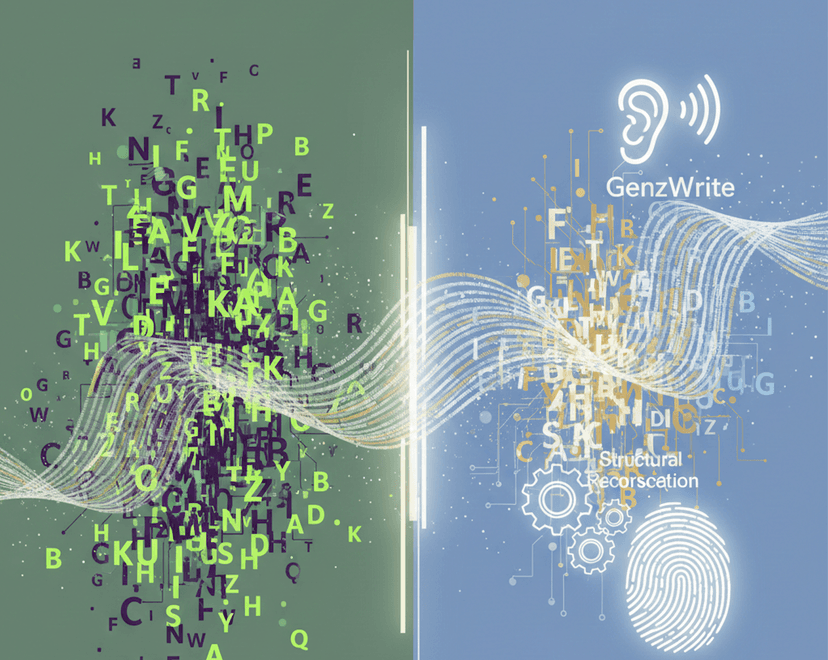
Discover the best AI humanizers of 2026. We compare GenZWrite against Phrasly, Humbot, and StealthWriter, Quillbot based on structural variety, tone control, and bypass reliability. Learn why structural reconstruction—not just synonym swapping—is the key to undetectable, professional writing this year
GenZWrite
GenZWrite official

The Best AI Humanizer for Turnitin in 2026
Turnitin doesn’t just look for "AI words"—it tracks the statistical fingerprint of your writing. In 2026, simple synonym swaps no longer work. This guide reveals the data-driven way to humanize your essays, bypass "burstiness" checks, and protect your academic reputation with tools that actually work.
GenZWrite
GenZWrite official
Humanize & Detect AI
Transform robotic AI text into natural, engaging content that passes detection and ranks higher.