AI Humanizer for Students: Complete 2026 Guide

Discover how AI humanizers help students transform AI-generated content into natural, undetectable writing. Complete guide to tools and strategies.
Students across the United States are increasingly turning to artificial intelligence tools to help with academic writing, research, and assignments. As AI-generated content becomes more prevalent in educational settings, institutions have responded with sophisticated detection systems designed to identify machine-written text. This has created a significant challenge for students who rely on AI assistance, leading to the emergence of AI humanizer tools specifically designed for academic contexts. These platforms transform AI-generated content into natural, human-sounding writing that maintains academic standards while avoiding detection flags. Understanding how these tools work and their role in modern education has become essential for college students navigating the intersection of technology and traditional academic requirements.
Understanding AI Humanizers in Academic Settings
An ai humanizer for students serves as a specialized transformation tool that converts machine-generated text into writing that reads naturally and authentically human. These platforms analyze AI-generated content and restructure sentences, vary vocabulary, adjust rhythm, and incorporate natural imperfections that characterize human writing. The technology behind these tools has evolved significantly in 2026, incorporating advanced natural language processing algorithms that understand academic writing conventions.
The rise of these tools correlates directly with the widespread adoption of ChatGPT and similar AI writing assistants in educational environments. Students face a paradox: they use AI to help understand complex topics and generate initial drafts, yet institutions penalize AI-detected submissions. AI humanizers address this gap by creating a bridge between AI assistance and human authorship.
How Detection Systems Identify AI Writing
Universities employ multiple layers of detection technology, with Turnitin leading as the most widely used platform across American colleges. These systems analyze writing patterns, sentence structure consistency, vocabulary distribution, and stylistic markers that distinguish machine-generated text from human composition. Understanding how AI detectors work provides crucial context for why humanization tools have become necessary.
Detection algorithms look for specific indicators:
- Uniform sentence length and structure throughout documents
- Repetitive transitional phrases and formulaic organization
- Lack of personal voice or individual writing quirks
- Absence of minor grammatical variations common in human writing
- Predictable vocabulary choices and word frequency patterns

Why Students Choose AI Humanization Tools
The decision to use an ai humanizer for students stems from multiple practical and academic pressures facing college students in 2026. Time constraints represent the most significant factor, with students balancing coursework, part-time jobs, internships, and personal responsibilities. AI tools offer efficiency, but submission without humanization risks academic penalties.
Financial considerations also play a role. Many students cannot afford traditional tutoring services or professional editing assistance, making AI humanizers an economical alternative. These tools provide instant results without the cost of human editors or writing centers with limited availability.
Academic Pressure and Performance Expectations
Modern college students face unprecedented academic expectations. Grade point averages directly impact scholarship retention, graduate school admission, and job prospects. A single flagged assignment can trigger academic integrity investigations, creating stress beyond the immediate grade impact.
Research on students' perceptions of AI in education reveals concerns about fairness and consistency in how institutions apply AI detection policies. Many students view humanization tools as leveling the playing field, particularly when peers use AI assistance without disclosure.
The pressure intensifies during finals season, when multiple deadlines converge. Students often rely on AI assistance to generate initial drafts quickly, then use humanization tools to ensure submissions pass detection systems. This workflow has become standard practice across major universities, with platforms reporting significant usage spikes during exam periods.
Key Features of Effective AI Humanizers
Not all humanization tools deliver equivalent results. Effective platforms designed specifically as an ai humanizer for students incorporate several critical features that distinguish them from basic paraphrasing tools or simple synonym replacers.
| Feature | Purpose | Student Benefit |
|---|---|---|
| Multi-layer processing | Restructures content at sentence, paragraph, and document levels | Creates natural flow matching human writing patterns |
| Academic tone preservation | Maintains scholarly vocabulary and formal structure | Ensures submissions meet professor expectations |
| Detection bypass guarantee | Specifically designed to pass Turnitin and similar systems | Eliminates submission anxiety and investigation risk |
| Instant processing | Delivers results in seconds rather than hours | Supports tight deadlines and last-minute submissions |
Advanced humanization platforms analyze context and meaning rather than simply replacing words. They understand academic disciplines have distinct writing conventions, adjusting output to match field-specific expectations. A biology lab report requires different language patterns than a literature analysis essay.
Speed and Reliability Considerations
College students work under constant deadline pressure, making processing speed essential. The best tools complete humanization in under thirty seconds while maintaining quality standards. Reliability matters equally-students cannot afford tools that produce inconsistent results or fail during critical submission windows.
Many students discover humanization tools through peer recommendations during high-stress academic periods. The growing search volume for AI humanizers during finals demonstrates how quickly these tools have become embedded in student academic workflows.
Comparing Humanization Methods and Approaches
Different ai humanizer for students platforms employ varying methodologies to transform AI-generated content. Understanding these approaches helps students select tools that match their specific needs and academic contexts.
Rule-Based vs. AI-Powered Humanization
Traditional rule-based systems apply predetermined patterns to restructure text. They swap synonyms, rearrange sentence components, and adjust paragraph organization according to fixed algorithms. While faster, these systems often produce awkward phrasing or lose original meaning.
AI-powered humanization represents the current standard, using machine learning models trained on millions of human-written academic papers. These systems understand context, maintain meaning while varying expression, and generate output that mirrors authentic student writing. The sophistication gap between approaches has widened significantly in 2026.
Students using basic paraphrasing tools frequently encounter detection flags because these systems create recognizable patterns. Advanced AI humanizers avoid this issue by introducing natural variation and unpredictability that characterizes genuine human composition.

Practical Applications Across Academic Disciplines
The versatility of an ai humanizer for students extends across various academic fields and assignment types. Each discipline presents unique challenges that effective humanization must address.
STEM Writing Requirements
Science, technology, engineering, and mathematics courses require precise technical language combined with clear explanations. Students often use AI to help articulate complex concepts, then humanize content to ensure natural flow while maintaining technical accuracy. Lab reports, research summaries, and problem-set explanations benefit particularly from this approach.
Technical writing demands consistency in terminology while avoiding robotic repetition-a balance that quality humanization tools achieve through contextual understanding. The tools preserve subject-specific vocabulary while varying sentence structure and explanatory approaches.
Humanities and Social Sciences
Essays in literature, history, philosophy, and social sciences require personal voice and analytical depth. These disciplines value individual perspective and interpretive nuance, making humanization especially critical. AI-generated humanities essays often lack the personal engagement professors expect, reading as detached summaries rather than thoughtful analysis.
Effective humanization adds subtle variations in tone, incorporates transitional variety, and introduces the minor imperfections that signal authentic student thinking. Understanding how to transform AI text to human text becomes essential for humanities students who need to demonstrate critical thinking alongside factual knowledge.
Navigating Academic Integrity Considerations
The ethical dimensions of using an ai humanizer for students generate significant debate within educational communities. Students must understand both institutional policies and broader questions about learning, authorship, and academic honesty.
Most universities prohibit submitting AI-generated content as original work, but policies vary regarding AI assistance during the writing process. Some institutions permit AI use for brainstorming, outlining, or research, while others ban all AI involvement. Students need clarity on their specific institution's stance.
The Distinction Between Assistance and Authorship
Educational experts increasingly recognize that AI tools function similarly to other writing aids students have long used-grammar checkers, thesauruses, writing centers, and peer feedback. The critical question becomes whether students understand and can explain their submitted work, regardless of the tools used during composition.
Research examining ethical considerations in AI implementation for student feedback emphasizes transparency and responsible development. When students use AI to learn concepts and generate initial understanding, then humanize that content into their own voice, they engage in a different process than simply copying AI output unchanged.
Understanding Evolving Definitions of Academic Misconduct
The concept of "AI-giarism" reflects changing perceptions of what constitutes plagiarism in an AI-enabled environment. Traditional plagiarism involves copying human-authored work without attribution. AI-generated content introduces complexity because the original "author" is an algorithm, not a person.
Students report confusion about where appropriate AI assistance ends and academic misconduct begins. Humanization tools exist within this gray area, transforming AI content into original expression while maintaining the underlying ideas and structure. Universities continue developing policies that address these nuanced scenarios.
Strategic Implementation for Maximum Effectiveness
Students who achieve the best results with an ai humanizer for students follow strategic approaches that extend beyond simply running content through a tool. Thoughtful implementation maximizes both quality and undetectability.
Pre-humanization preparation steps:
- Generate AI content with specific, detailed prompts that include personal perspective
- Review AI output for factual accuracy and relevance to assignment requirements
- Identify sections requiring additional research or development
- Note areas where personal examples or insights should be incorporated
- Check that the AI-generated content actually answers the assignment question
Post-humanization refinement process:
- Read humanized output completely to ensure natural flow and coherence
- Add subject-specific terminology that matches course vocabulary
- Incorporate examples from class lectures, discussions, or assigned readings
- Adjust tone to match personal writing style from previous assignments
- Verify all citations and references remain accurate after transformation
This comprehensive approach treats humanization as one component within a larger writing process rather than a simple automated solution. Students who invest time in refinement produce stronger final submissions that genuinely reflect their understanding.
Tools and Technology Comparison
The market for AI humanization tools has expanded rapidly, with dozens of platforms claiming to offer the best ai humanizer for students. Evaluating options requires understanding key differentiators and performance metrics that matter for academic success.
| Platform Type | Processing Speed | Detection Bypass Rate | Academic Tone Quality | Best Use Case |
|---|---|---|---|---|
| Basic paraphrasers | Very fast (5-10 sec) | Low (40-60%) | Poor | Quick rewrites of short passages |
| Mid-tier humanizers | Fast (15-30 sec) | Moderate (65-80%) | Fair | General assignments with moderate detection risk |
| Premium humanizers | Fast (10-20 sec) | High (95-99%) | Excellent | Critical submissions requiring guaranteed bypass |
| Specialized academic tools | Moderate (20-40 sec) | Very high (98-100%) | Superior | Essays, research papers, high-stakes assignments |
Students frequently discover through trial and error that free tools produce inconsistent results, often requiring multiple processing attempts or manual editing to achieve acceptable quality. Premium platforms designed specifically for academic contexts deliver more reliable outcomes, particularly for assignments submitted through Turnitin detection systems.

Essential Capabilities for Student Success
Beyond basic humanization, effective tools offer features that address specific student needs. Batch processing allows students to humanize multiple assignments efficiently during busy academic periods. Citation preservation ensures references remain accurate and properly formatted after transformation.
Tone adjustment capabilities let students match their established writing voice, making humanized content consistent with previous submissions professors have graded. This consistency prevents the red flag of dramatic writing style changes that can trigger manual review even when automated detection passes.
GenZWrite has emerged as a leading solution specifically designed for college students who need guaranteed detection bypass combined with natural academic tone. The platform processes essays instantly while maintaining the scholarly vocabulary and formal structure professors expect from university-level submissions.
Common Challenges and Solutions
Students implementing an ai humanizer for students encounter predictable obstacles that understanding in advance helps avoid. These challenges span technical issues, quality concerns, and strategic considerations.
Maintaining Original Meaning During Transformation
The primary risk in humanization involves losing the intended message or argument through excessive restructuring. Lower-quality tools sometimes change sentence meaning while pursuing undetectability, creating submissions that no longer address assignment requirements.
Solution strategies include:
- Reviewing humanized output against original AI content to verify key points remain intact
- Using tools that offer adjustable humanization intensity rather than single-setting processing
- Manually editing sections where meaning drift occurs
- Comparing final submissions to assignment rubrics before submitting
Balancing Speed with Quality
Deadline pressure tempts students to rush through humanization without adequate review. This approach produces submissions with inconsistent quality-some sections reading naturally while others retain obvious AI markers or contain factual errors introduced during processing.
Effective time management allocates sufficient hours for the complete process: AI generation, humanization, review, and refinement. Students who plan ahead achieve significantly better results than those scrambling at submission deadlines. Building in twenty-four hours between humanization and submission allows fresh-eye review that catches issues missed during initial processing.
Advanced Strategies for Specific Assignment Types
Different academic assignments require tailored approaches when using an ai humanizer for students. Understanding these distinctions improves results across diverse coursework.
Research Papers and Extended Essays
Longer assignments present unique challenges because maintaining consistent voice across thousands of words becomes critical. Humanizing ten-page research papers in a single batch risks introducing style inconsistencies between sections.
The optimal approach involves processing papers in logical segments-introduction, literature review, methodology, results, discussion, conclusion-then reviewing transitions between sections for coherence. This method preserves the distinct purpose of each segment while ensuring overall flow.
Citations require particular attention in research papers. Quality humanization tools preserve in-text citations and reference list formatting, but students should verify all sources remain accurately represented after transformation. Understanding how to properly rewrite research content while maintaining attribution prevents accidental plagiarism.
Short-Response Assignments and Discussion Posts
Brief assignments under five hundred words present different considerations. These often require quick turnaround and conversational academic tone rather than formal research style. Humanization for discussion posts should introduce natural informality while maintaining intellectual substance.
Students find success using higher humanization intensity for short responses because the limited word count allows thorough manual review. Adding personal examples or questions at the end of humanized discussion posts increases authenticity and engagement with course material.
Measuring Success and Effectiveness
Students need reliable methods to evaluate whether their ai humanizer for students actually delivers promised results. Several testing approaches provide confidence before high-stakes submissions.
Verification testing steps:
- Run humanized content through multiple free AI detection tools
- Compare detection scores before and after humanization
- Check that academic tone remains appropriate for assignment level
- Verify factual accuracy persists through transformation process
- Confirm citations and references maintain correct formatting
AI detector tools offer students self-assessment capabilities before official submission. Running content through these checkers identifies potential flags that might trigger professor review, allowing additional refinement when necessary.
Progressive testing involves starting with lower-stakes assignments to evaluate humanization tool effectiveness before using on critical papers worth significant grade percentages. This cautious approach builds confidence while minimizing academic risk.
Integration with Overall Academic Workflow
Successful students integrate an ai humanizer for students into comprehensive academic strategies rather than treating it as an isolated solution. This holistic perspective improves both immediate assignment quality and long-term learning outcomes.
Combining AI Assistance with Traditional Study Methods
The most effective approach uses AI and humanization tools to supplement rather than replace traditional learning. Students who attend lectures, complete readings, participate in discussions, and understand course material produce better AI prompts and recognize when humanized output requires correction.
This integrated workflow might involve:
- Using AI to explain difficult concepts from lectures or readings
- Generating initial outlines to organize thoughts before detailed writing
- Humanizing AI-assisted drafts that incorporate personal class notes and insights
- Reviewing humanized content against course materials to ensure accuracy
- Adding original examples and analysis that demonstrate genuine understanding
Essential AI applications for students in 2026 extend beyond writing assistance to research organization, study planning, and productivity enhancement. Humanization tools work best when part of this broader technology ecosystem.
Building Skills While Using Technology
The debate about AI tools in education often centers on whether they enhance or undermine learning. Students who use humanization strategically report developing stronger understanding through the process of reviewing, refining, and personalizing AI-generated content.
This learning occurs when students:
- Critically evaluate AI output for accuracy and relevance
- Identify gaps in AI-generated content requiring additional research
- Recognize their evolving writing voice and style preferences
- Develop judgment about which sources and examples strengthen arguments
- Build confidence in articulating complex ideas clearly
Future Trends and Developments
The landscape of AI humanization tools continues evolving rapidly as both detection systems and humanization technologies advance. Students benefit from understanding emerging trends that will shape academic writing in coming years.
Detection Arms Race and Technological Evolution
Universities invest heavily in detection technology improvements, creating ongoing competition between identification systems and humanization tools. Each detection advancement prompts humanization tool developers to refine their algorithms, creating a technological cycle that shows no signs of slowing.
Current trends indicate detection systems moving beyond simple pattern recognition toward more sophisticated analysis of reasoning structure, knowledge depth, and conceptual connections. Humanization tools are responding by incorporating deeper contextual understanding and subject-specific training data.
Institutional Policy Development
Educational institutions are gradually developing more nuanced AI policies that distinguish between different types of assistance. Some universities now permit AI use for specific purposes like brainstorming or grammar checking while prohibiting it for content generation. These evolving guidelines create clearer boundaries for appropriate humanization tool use.
Students should monitor their institution's policy updates and participate in discussions about responsible AI implementation in education. Understanding the reasoning behind policies helps students make informed decisions about when and how to use assistance tools appropriately.
Practical Tips for Immediate Implementation
Students ready to start using an ai humanizer for students benefit from specific tactical guidance that accelerates successful adoption while avoiding common pitfalls.
First-time user checklist:
- Start with a low-stakes assignment to test tool reliability and quality
- Save both original AI content and humanized versions for comparison
- Read humanized output completely before submission rather than spot-checking
- Test detection bypass using free online AI checkers before official submission
- Keep backup versions of all content in case reprocessing becomes necessary
- Note processing time required to plan adequately for future deadlines
Optimization techniques:
- Provide detailed prompts to AI generators including personal perspective elements
- Specify desired academic tone and complexity level in initial generation
- Break longer papers into sections for more controlled humanization
- Add personal examples and insights after humanization for authenticity
- Review reference formatting carefully as citations sometimes require adjustment
- Maintain consistent voice across multiple assignments to avoid style change flags
Students who systematically implement these practices report higher satisfaction with results and lower stress around submission deadlines. The combination of strategic planning and quality tools creates sustainable academic success patterns.
Using an ai humanizer for students has become a practical necessity for college students navigating the complex intersection of AI assistance and academic requirements in 2026. The right tools and approaches transform AI-generated content into authentic, natural writing that maintains academic standards while passing detection systems. GenZWrite provides exactly this capability-instant humanization that bypasses Turnitin and delivers submission-ready academic writing trusted by over 100,000 U.S. students facing deadline pressure and detection concerns. Transform your AI-assisted essays into naturally human content that reflects your voice and understanding while meeting every academic requirement with confidence.

Rita Jamal
AI Content Specialist
Relateted Articles

Students Are Getting Flagged for AI… Even When They Didn’t Use It
Students are facing a new academic crisis: being accused of using AI when they actually wrote the work themselves. As AI detectors like Turnitin and GPTZero struggle with high false-positive rates, even the best students are being unfairly flagged. Learn why academic clarity triggers these algorithms, the bias against non-native speakers, and how to use an AI humanizer to protect your GPA and your reputation from flawed software.

GenZWrite
GenZWrite official
The Definitive Guide to AI Humanization in 2026: GenZWrite vs. the Top 6 Tools
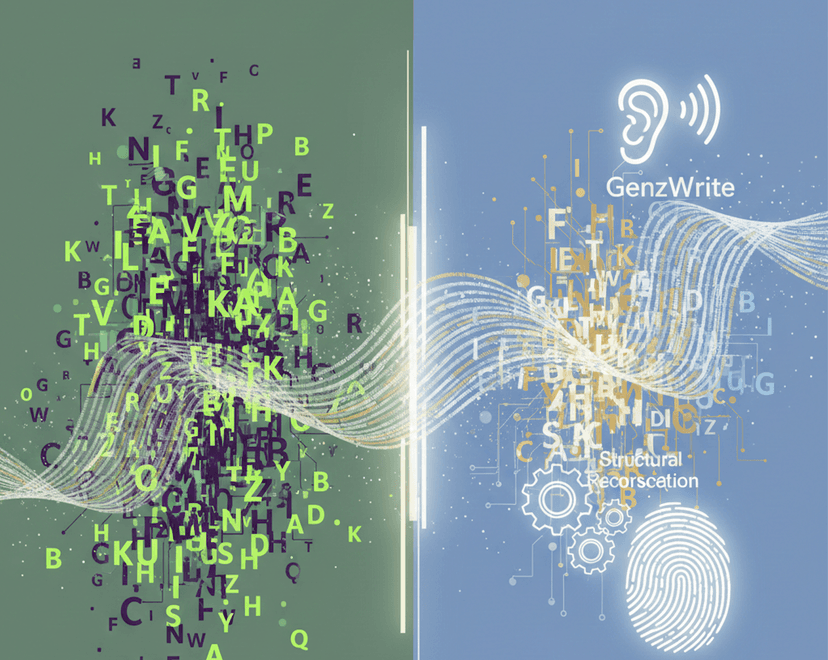
Discover the best AI humanizers of 2026. We compare GenZWrite against Phrasly, Humbot, and StealthWriter, Quillbot based on structural variety, tone control, and bypass reliability. Learn why structural reconstruction—not just synonym swapping—is the key to undetectable, professional writing this year
GenZWrite
GenZWrite official

The Best AI Humanizer for Turnitin in 2026
Turnitin doesn’t just look for "AI words"—it tracks the statistical fingerprint of your writing. In 2026, simple synonym swaps no longer work. This guide reveals the data-driven way to humanize your essays, bypass "burstiness" checks, and protect your academic reputation with tools that actually work.
GenZWrite
GenZWrite official
Humanize & Detect AI
Transform robotic AI text into natural, engaging content that passes detection and ranks higher.