The Best AI Humanizer for Turnitin in 2026

Turnitin doesn’t just look for "AI words"—it tracks the statistical fingerprint of your writing. In 2026, simple synonym swaps no longer work. This guide reveals the data-driven way to humanize your essays, bypass "burstiness" checks, and protect your academic reputation with tools that actually work.
How Turnitin Actually Detects AI in 2026
Before you can beat Turnitin, you need to understand what it's measuring. Most students assume AI detectors look for specific phrases or "AI-sounding" language. That's not how it works.
Turnitin uses a multi-layered analysis built around two core statistical signals:
Perplexity measures how predictable each word choice is in context. Language models are trained to always choose the statistically safest next word, they're essentially autocomplete on a massive scale. Human writers make surprising choices. We use words that are technically "wrong" for the register, slip in colloquialisms, choose the second-best word because it sounds better in the sentence. That unpredictability creates high perplexity scores. AI text, by contrast, flows smoothly and predictably from one word to the next and Turnitin reads that smoothness as a red flag.
Burstiness measures variation in sentence structure and length. Humans don't write in metronomic rhythm. We alternate between long, idea-dense sentences and short, punchy ones. We lose track of a thought mid-sentence and start again. AI writes in a beautifully consistent cadence, similar sentence lengths, balanced paragraph structures, smooth transitions. That consistency is exactly what Turnitin's detection model is trained to catch.
Here's the critical implication: swapping synonyms doesn't change either of these metrics. If you take an AI-generated paragraph and replace "utilize" with "use" and "facilitate" with "help," you've changed the vocabulary but left the perplexity and burstiness scores completely intact. Turnitin will still flag it.
To genuinely pass Turnitin in 2026, a humanizer needs to restructure your sentences at a foundational level, breaking uniform rhythms, injecting genuine variation in length and complexity, and making word choices that a human writer would make rather than a language model optimizing for probability.
Why Most AI Humanizers Fail Against Turnitin
This is the part that costs students the most. There are dozens of tools marketing themselves as "AI humanizers" in 2026. Most of them are glorified paraphrasers that swap vocabulary, rearrange sentence order, and call it humanized.
They work reasonably well against ZeroGPT and even GPTZero, which are more surface-level in their analysis. But Turnitin is a different challenge entirely. It has access to institutional data from millions of student submissions, an AI detection model that's been specifically fine-tuned on academic writing, and a sentence-level analysis system that evaluates every paragraph independently.
Basic paraphrasers typically reduce Turnitin AI scores from around 90% down to 65–75%. That's still a clear flag. Worse, some tools introduce awkward phrasing in their rewriting that actually makes the text look more suspicious to a human professor, not less.
The tools that do work against Turnitin share a specific characteristic: they target structural rewriting rather than surface substitution. They change sentence lengths deliberately. They vary the rhythm. They make the kind of imperfect, slightly idiosyncratic word choices that human writers naturally make. They don't just change what the essay says they change how it moves.
You can verify your results before submitting using GenZWrite's built-in AI detector, which scans your text against the same signals Turnitin uses and shows you exactly which sentences are still reading as AI-generated so you can fix them before they're flagged.
What to Look For in the Best AI Humanizer for Turnitin
Not all humanizers are built equally. Before you choose a tool for academic submissions, evaluate it on these four criteria:
Structural rewriting, not synonym swapping. The tool should demonstrably change sentence lengths and rhythm, not just vocabulary. Ask: does the output have more sentence variety than the input? Do some sentences become notably shorter or longer?
Academic tone preservation. Many humanizers introduce casual language to break up AI patterns, this can be effective on GPTZero but looks suspicious in a formal essay context. The best tools maintain your academic register while introducing natural variation.
Citation and formatting integrity. Turnitin checks in-text citations and bibliography formatting as part of its originality analysis. A humanizer that mangles your citations while rewriting creates a new problem that's worse than the original. Look for tools that preserve your references intact.
Built-in detection verification. The best workflow always includes checking your own work before submission. Tools that include an integrated AI detector let you run your essay through the same type of analysis your professor will run, catching issues before they matter.
The GenZWrite Approach: Why It Works Where Others Don't
GenZWrite AI humanizer was built specifically for the academic context. Rather than applying a generic text-rewriting algorithm, it uses a multi-layered approach designed to target the precise metrics that Turnitin measures.
When you paste your essay into GenZWrite and select Academic tone, the system doesn't just look at vocabulary, it analyzes the burstiness profile of your entire document and deliberately introduces variation where it's too consistent. It identifies the paragraphs with the lowest perplexity scores and restructures their word choices to be more surprising, more human. It breaks up the uniform rhythm that LLMs naturally produce and replaces it with the uneven, organic flow of a person who's actually thinking through an argument.
The result is text that maintains your original ideas and structure while presenting them in a voice that reads as genuinely human to both Turnitin's algorithm and a professor reading it on a screen.
The Academic tone mode is specifically calibrated for essays, research papers, and formal assignments, it doesn't introduce casual language or colloquialisms that would look out of place in a submitted paper. Your argument stays intact. Your citations stay intact. What changes is the statistical fingerprint.
For students working on longer submissions, dissertations, research papers, extended essays, GenZWrite word count capacity and preservation of academic register makes it one of the few tools genuinely suited to high-stakes academic work.
The Right Workflow: Using an AI Humanizer for Turnitin Submissions
The students who get flagged aren't always the ones who used AI the most. Often, they're the ones who skipped a verification step at the end. Here's the workflow that consistently produces clean results:
Draft your content using AI assistance if needed for outlining, research summaries, or structural suggestions. Write the actual sentences in your own voice as much as possible.
Humanize your draft with a structural rewriting tool like GenZWrite. Select the Academic tone for formal submissions. Read the output carefully and make any adjustments that feel out of character for your own writing.
Verify before submitting. Run your final draft through an AI detector that approximates what Turnitin will see. GenZWrite ai-detector gives you a sentence-level analysis you can see exactly which lines are still reading as AI-generated and address them individually before they reach your professor.
Add your voice. The last manual pass is the most important. Add a personal observation. Rephrase one sentence in a way that's distinctly yours. Include a transition that sounds like how you actually think. These small human touches are what separate essays that pass from essays that almost pass.
The False Positive Problem Nobody Talks About
Here's a reality every student deserves to know: Turnitin flags human-written essays as AI-generated more often than the company admits. Independent studies in 2026 have documented false positive rates that are meaningfully higher than Turnitin's marketing suggests, particularly for students who write in formal academic registers, students who are non-native English speakers, and anyone whose writing naturally tends toward structured, clear argumentation.
In other words, if you write well by your professor's standard, you're more likely to get flagged. Clean topic sentences, logical paragraph flow, consistent argument structure: all of these are features of good academic writing and features of AI output. Turnitin can't always tell the difference.
This is not an argument to abandon integrity. It's an argument to understand the tools being used to evaluate your work and to protect yourself accordingly. Knowing how to humanize AI text — or even naturally human-sounding text that triggers false positives is an increasingly practical academic skill in 2026. Not cheating. Survival.
Bottom Line
The best AI humanizer for Turnitin in 2026 is the one that rewrites structure, not just vocabulary. Surface-level paraphrasers will leave you flagged at 60–75% AI probability. Tools that understand burstiness and perplexity and target them directly, consistently bring scores down to single digits.
Before your next submission, run your essay through a tool built for academic contexts. Verify your results. Add your voice. Submit with confidence.
Because in 2026, knowing how these systems work isn't a shortcut. It's just common sense.

GenZWrite
GenZWrite official
Relateted Articles

Students Are Getting Flagged for AI… Even When They Didn’t Use It
Students are facing a new academic crisis: being accused of using AI when they actually wrote the work themselves. As AI detectors like Turnitin and GPTZero struggle with high false-positive rates, even the best students are being unfairly flagged. Learn why academic clarity triggers these algorithms, the bias against non-native speakers, and how to use an AI humanizer to protect your GPA and your reputation from flawed software.
GenZWrite
GenZWrite official
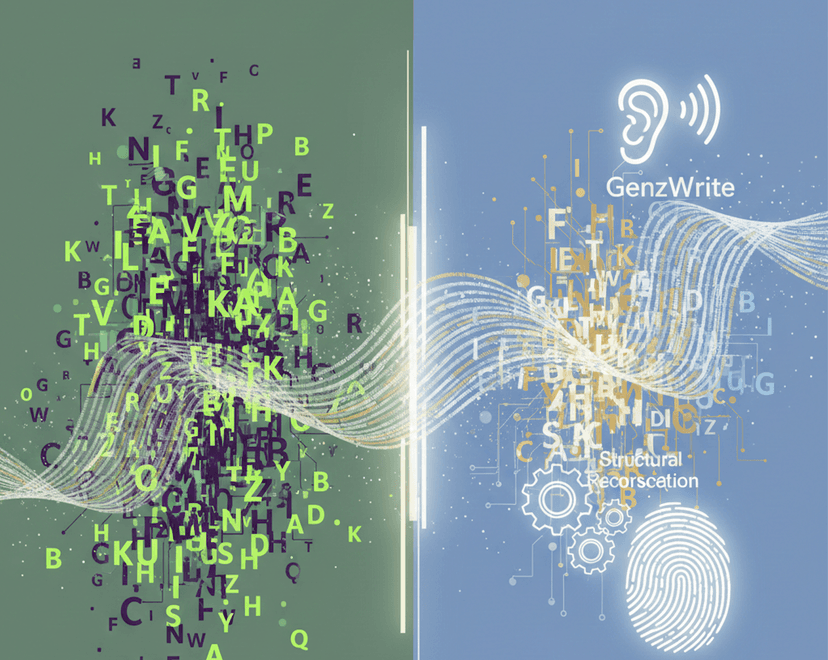
The Definitive Guide to AI Humanization in 2026: GenZWrite vs. the Top 6 Tools
Discover the best AI humanizers of 2026. We compare GenZWrite against Phrasly, Humbot, and StealthWriter, Quillbot based on structural variety, tone control, and bypass reliability. Learn why structural reconstruction—not just synonym swapping—is the key to undetectable, professional writing this year
GenZWrite
GenZWrite official
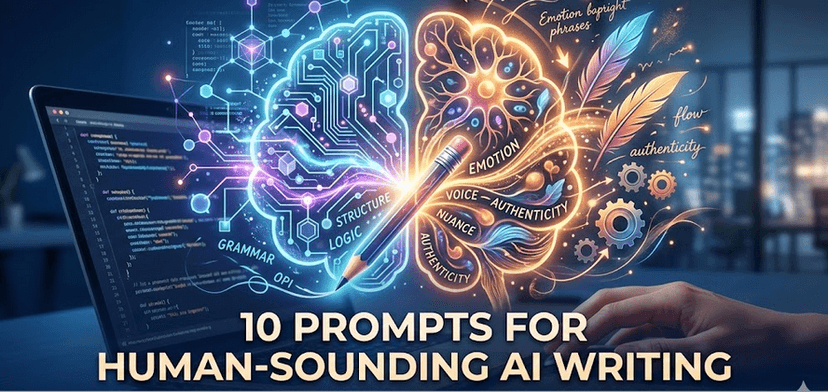
10 Prompts for Human-Sounding AI Writing (And How to Automate It)
AI writing often feels stiff and soul-less. Discover 10 powerful prompts to inject personality into your drafts and see how GenZWrite makes it even easier to bypass detectors.
GenZWrite
GenZWrite official
Humanize & Detect AI
Transform robotic AI text into natural, engaging content that passes detection and ranks higher.