Why Students Are Searching for an AI Humanizer More Than Ever During Finals Season
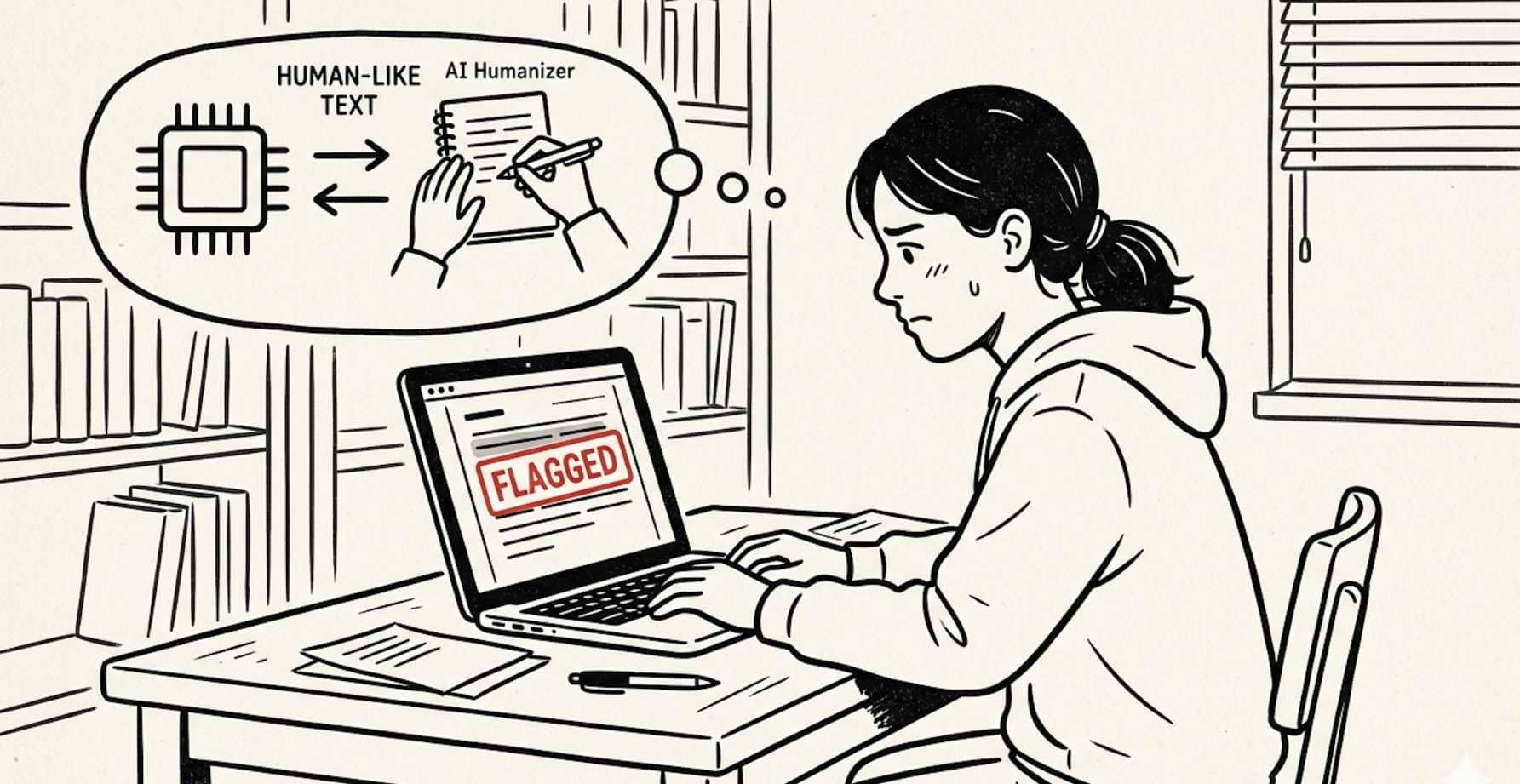
Finals stress now comes with a new threat: AI detectors flagging honest student essays. With false positives hitting non-native speakers hardest and real academic consequences on the line, students are turning to AI humanizers to protect their work. Here is what they actually need from these tools in 2026.
Finals season has always been stressful. Deadlines stack up, sleep disappears, and every submitted essay feels like a gamble. But in 2026, there is a brand-new layer of anxiety that students across Reddit are venting about loudly: the fear of being flagged by an AI detector, even when their work is entirely their own.
Threads in r/college, r/ChatGPT, and r/ArtificialIntelligence are full of students sharing horror stories. Some wrote every word themselves, only to watch Turnitin return a suspiciously high AI score. Others used AI as a drafting aid and then heavily revised the output, yet their professors still accused them of cheating. A growing number of international students and non-native English speakers are reporting that their natural writing style is being mistaken for machine output by tools that were never built with them in mind.
The result? A massive surge in demand for tools that can humanize AI text, fix flagged drafts, and help students submit work that actually sounds like them.
The Real Problem Students Are Describing
Before we talk about solutions, it helps to understand exactly what is going wrong in classrooms right now.
False positives are real and they are damaging. Research published by University of Chicago economists found that most commercial AI detectors falsely flag roughly one in every hundred pieces of genuine human writing as AI-generated. In a typical class of thirty students, that math means at least one innocent student could face academic misconduct charges every few assignments. Those are not abstract odds. Students are receiving zeros, getting sent to judicial affairs offices, and in some cases filing lawsuits.
The bias problem is even more specific. Stanford researchers found that while AI detectors performed near-perfectly on essays by U.S.-born students, they classified more than 61% of TOEFL essays written by non-native English speakers as AI-generated. Even more striking, 97% of those non-native English student essays were flagged by at least one of the seven detectors tested. That is not a minor technical glitch. That is a systemic failure that disproportionately punishes international students who are already navigating the added challenge of writing academic work in a second language.
Real consequences have followed. In one high-profile case, a student with autism was accused of submitting AI-generated work after a Turnitin report showed a "100% AI score." The student denied using AI and submitted independent reviews from other detectors labeling his essay "human written," but the university still upheld the violation.
The lesson students are drawing from stories like these is straightforward: writing well can now get you accused of cheating. That is the paradox driving them to look for an AI humanizer in the first place.
Why Students Turn to AI in the First Place
To understand what students actually need from a humanize AI text tool, you have to understand how they are using AI writing assistants in the first place.
Most students are not simply pasting a prompt into ChatGPT and submitting the output wholesale. According to conversations across Reddit communities, the real workflow looks more like this: a student uses an AI tool to generate a rough outline or a first draft to overcome writer's block, then rewrites significant portions of it in their own voice, adds their own arguments, and incorporates citations. The final product is a genuine mix of human thinking and AI-assisted structure.
The problem is that even this hybrid approach can leave behind enough statistical "fingerprints" to trigger a detector. Modern detectors analyze what researchers call perplexity (how unpredictable your word choices are) and burstiness (how much your sentence lengths vary). AI-generated text tends to score low on both because language models favor statistically likely word combinations and consistent sentence structures. When a student revises an AI draft but does not fully eliminate these patterns, the detector still picks them up.
This is the exact gap that tools designed to humanize essays are meant to fill. A good AI humanizer does not just swap synonyms. It restructures sentences at a deeper level, introduces natural variation in rhythm and phrasing, and produces output that reads the way a real person actually writes, which is to say, imperfectly and with personality.
What Students Actually Need From an AI Humanizer
Based on the concerns flooding Reddit this finals season, here is what students are genuinely looking for when they search for an AI humanizer:
Preservation of original meaning. The number one complaint about cheap or low-quality humanizer tools is that they mangle the argument. A student who spent hours developing a nuanced thesis does not want to run it through a tool and get back something that says the same thing in ten different words with none of the original logic intact. The best tools to humanize AI text keep the ideas, the structure, and the argument fully intact while adjusting only the stylistic and statistical elements that trigger detectors.
Tone matching. Academic writing has a register. It is formal but not robotic, precise but not stiff. Students writing undergraduate essays need output that sounds like a capable twenty-year-old wrote it, not like a legal document or a press release. Many Reddit users report frustration with humanizer tools that either over-formalize their writing or push it in the opposite direction, making it sound casual and sloppy. The ideal tool lets users set or detect their intended academic tone and match the output accordingly.
Detection score feedback. Several tools now include a built-in AI detection preview so students can see how their text scores against common detectors before they submit. Platforms like Essay Humanizer include an AI-detection preview that shows how text scores after humanization, along with fast and private processing with no content saved. This kind of transparency matters enormously to students who have already been burned once by a surprise flag.
Support for longer documents. Many humanizer tools cap free usage at a few hundred words, which forces students into a frustrating paragraph-by-paragraph workflow. Reddit discussions describe students pasting paragraph by paragraph and humanizing repeatedly to get through a full essay, which is time-consuming and produces inconsistent results across the document. Students submitting five-thousand-word research papers need a tool that can handle their full document and maintain stylistic consistency from introduction to conclusion.
Non-native speaker sensitivity. Given how badly current detectors already treat international students, a quality humanize AI text tool should be specifically calibrated to avoid outputs that pattern-match too closely to the simplified, regular sentence structures that detectors associate with non-native writing. This is a nuanced requirement that most tools do not address, but it is one of the most urgent needs on campus right now.
The False Positive Crisis Is Pushing Honest Students Toward Humanizer Tools
Here is a detail that often gets lost in the conversation about AI and academic integrity: a significant portion of the students seeking out AI humanizer tools are not trying to cheat. They are trying to protect themselves.
Some users of humanizer tools rely on them to avoid detection of cheating, while others say they do not use AI at all in their work but want to ensure they are not falsely accused by AI-detector programs.
That second group is growing. When an honest student sees their classmate get a zero on a well-written essay because a detector misfired, rational self-preservation kicks in. They start running their own human-written work through humanizer tools not because it was generated by AI but because they cannot afford the risk of a false positive during finals when grades determine scholarships, academic standing, and graduation.
A growing number of college students say their work has been falsely flagged as written by AI, and several have filed lawsuits against universities over the emotional distress and punishments they faced as a result. Until universities adopt more reliable and fairer policies, students will continue to use every tool available to protect themselves.
How to Humanize Essays the Right Way
Using an AI humanizer effectively is not just about running text through a tool and hoping for the best. Here are the practices that produce the best outcomes:
Start with your own revisions first. Before using any tool to humanize AI text, spend time rewriting the draft in your own voice. Add personal observations, restructure paragraphs to reflect your argument style, and replace any phrasing that does not sound like you. The humanizer then works on text that is already partially yours, which produces much more authentic results.
Work section by section for long documents. Even tools that support longer inputs benefit from a more deliberate approach. Process your introduction, body sections, and conclusion separately so you can review each for coherence and tone before moving to the next.
Read the output aloud. This is the single most effective quality check for humanized text. If you cannot read a sentence naturally without stumbling, it will not read as authentic to a grader either. Flag anything that sounds awkward and revise it manually.
Cross-check with multiple detectors. Different detectors use different algorithms. A piece of text that passes GPTZero may still trigger Originality.ai. Run your final draft through at least two or three detectors before submission so you know where you stand.
Do not humanize if the original is already strong. If you wrote the draft entirely yourself and it sounds genuinely like your voice, running it through a humanizer could actually introduce patterns that feel less authentic. These tools are most valuable when you are starting from AI-generated text, not when your human writing is already solid.
What the Best AI Humanizer Tools Have in Common
The Reddit community has been thorough in stress-testing these tools, and a few consistent qualities separate the good ones from the ones that waste your time.
The best tools restructure at the sentence and paragraph level rather than just swapping synonyms. Detector algorithms are sophisticated enough to see through simple word replacement. Real humanization changes the rhythm, the syntax, and the statistical properties of the text in ways that go deeper than a thesaurus.
They also preserve academic formatting. Footnotes, citations, section headers, and technical terminology should survive the humanization process unchanged. A tool that strips out your citations or garbles a technical term is creating more work, not less.
Finally, the best tools are fast and private. During finals week, a student does not have time to wait twenty minutes for output or wonder whether their essay is being stored on a server somewhere. Speed and data privacy are features, not bonuses.
The Bigger Picture
The surge in students searching for AI humanizer tools is not a story about cheating. It is a story about a broken system that is making honest students anxious and forcing everyone, including students who never touched an AI writing tool, to think about how their work will be perceived by an algorithm.
Studies have found serious limitations of even state-of-the-art AI-generated text detection tools and their unsuitability for use as evidence of academic misconduct, with researchers concluding that these systems should not be used in academic settings. Yet two-thirds of teachers are still using them.
Until detection tools become fair, accurate, and free of demographic bias, tools that help humanize AI text will remain an essential part of the student toolkit, not as a path to dishonesty, but as a reasonable response to an unreasonable situation.
If you are heading into finals with essays that need polishing, a clear process, and tools that actually work, the AI humanizer landscape in 2026 offers more options than ever. The key is knowing what to look for: meaning preservation, tone matching, detection score transparency, and an output that genuinely sounds like you.
Because at the end of the day, that is all a humanize essay tool should do. Help your ideas sound like yours

Rita Jamal
AI Content Specialist
Relateted Articles
AI in Academia: How to Humanize Student Writing Without Losing Your Voice
Discover how students can use AI in academic writing while preserving originality, tone, and personal voice—without triggering AI detectors
Rita Jamal
AI Content Specialist

Bypass ChatGPT Detectors: Smart Essay Writing Strategies for the Modern Student
Learn how to use AI tools like ChatGPT responsibly in academic writing. This guide explores how AI detectors work, why they matter, and practical strategies to write authentic, human-sounding essays without risking integrity or originality.
Rita Jamal
AI Content Specialist

Free vs Paid AI Humanizers: What Most Tests Don’t Tell
Not all AI humanizers are equal. See why free tools fail on essays and which paid options produce safer, more natural writing.
Rita Jamal
AI Content Specialist
Humanize & Detect AI
Transform robotic AI text into natural, engaging content that passes detection and ranks higher.