Best Free AI Humanizer 2026: Top Tools for Students

Discover the best free AI humanizer 2026 tools for students. Compare features, word limits, and effectiveness in bypassing AI detectors this year.
Students across the United States face an unprecedented challenge in 2026: submitting AI-assisted essays that pass increasingly sophisticated detection systems. With professors and institutions deploying advanced tools to identify AI-generated content, the demand for reliable AI humanizers has skyrocketed. The market now offers numerous free options, each promising to transform robotic text into natural, human-sounding writing. Finding the best free AI humanizer 2026 requires understanding what separates effective tools from ineffective ones, especially when academic integrity and submission deadlines hang in the balance.
Understanding AI Humanizers and Their Role in 2026
AI humanizers serve a critical function in today's academic landscape. These tools rewrite AI-generated content to eliminate detectable patterns that flag submissions as artificial. The technology has evolved significantly, with 2026 platforms employing advanced natural language processing to mimic authentic student writing styles.
The core mechanism involves analyzing text for telltale AI signatures: repetitive sentence structures, overly formal vocabulary, predictable transitions, and uniform paragraph lengths. Modern humanizers replace these patterns with varied syntax, colloquial expressions, and intentional imperfections that characterize genuine human writing.
Why Free Options Matter for Students
Budget constraints drive most students toward free solutions. Subscription costs for premium humanizers range from $15 to $50 monthly, which accumulates to $180-$600 annually. For students already managing tuition, textbooks, and living expenses, these costs prove prohibitive.
Free tools democratize access to technology that levels the playing field. Students without financial resources can still submit polished work without triggering detection systems. However, free versions typically impose limitations that users must navigate strategically.
Key Features to Evaluate in Free AI Humanizers
Selecting the best free AI humanizer 2026 demands careful assessment across multiple dimensions. Not all platforms deliver equal results, and some free options outperform certain paid alternatives.
Word Count Limitations
Free tiers restrict processing capacity to manage server costs. Common limitations include:
- 500-word limits: Entry-level tools suitable for short responses
- 1000-word limits: Mid-range options for standard essays
- 2500-word limits: Premium free tiers for longer assignments
- Unlimited with registration: Platforms requiring account creation
Students writing research papers exceeding 3000 words must either upgrade or process content in segments. This fragmentation introduces consistency challenges when reassembling humanized sections.
Detection Bypass Effectiveness
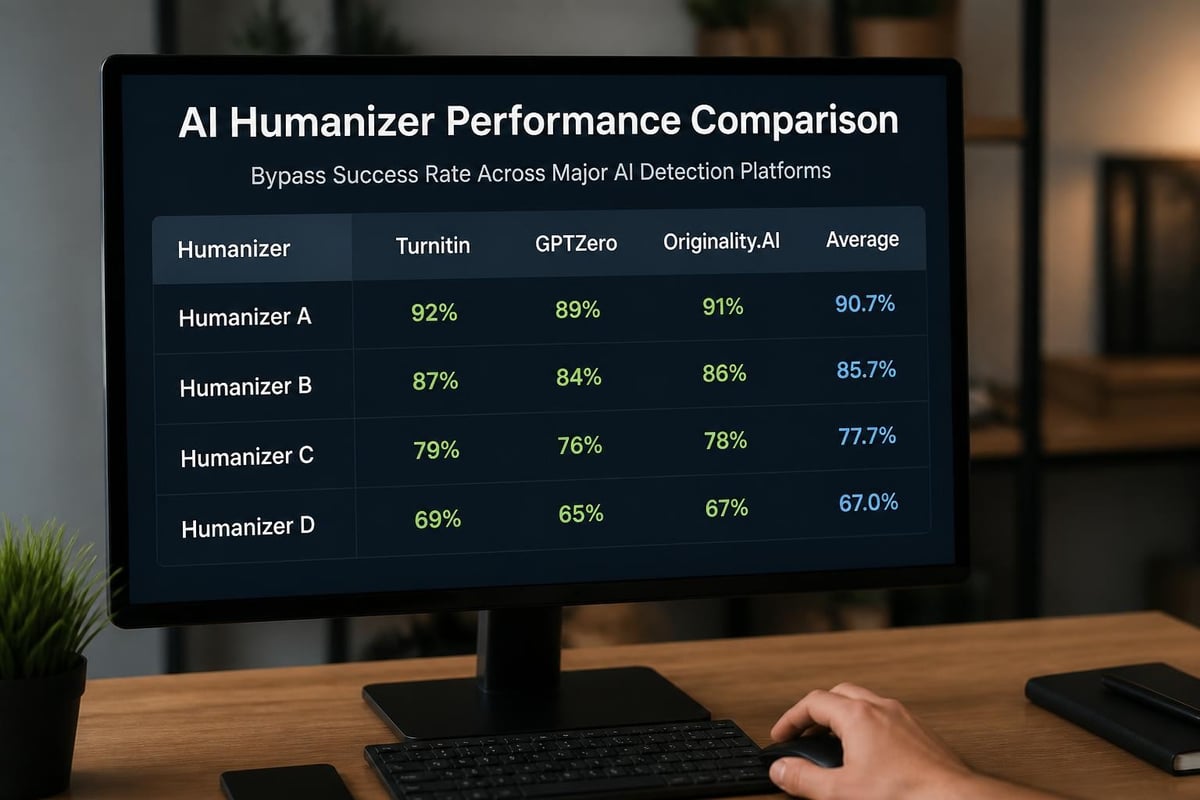
The primary metric for evaluating humanizers centers on their ability to fool detection systems. Research examining AI-generated text detection tools reveals significant variance in accuracy across platforms.
| Detection Platform | Average Bypass Rate | False Positive Rate |
|---|---|---|
| Turnitin AI Detection | 65-85% | 12-18% |
| GPTZero | 70-90% | 8-15% |
| Originality.AI | 60-80% | 10-20% |
| Copyleaks | 55-75% | 15-25% |
Top-tier humanizers consistently achieve bypass rates above 85%, while inferior tools struggle to reach 60%. Understanding how AI detectors work provides insight into why certain humanizers succeed where others fail.
Processing Speed and User Experience
Time-sensitive submissions require fast processing. The best platforms complete humanization within 30-60 seconds for 1000-word essays. Slower tools consuming 3-5 minutes create bottlenecks during deadline crunches.
Interface complexity also impacts usability. Intuitive platforms feature:
- Single-click processing
- Real-time preview windows
- Side-by-side comparison views
- One-click copying to clipboard
- Mobile-responsive design
Clunky interfaces with multiple steps, mandatory tutorials, or confusing navigation waste precious time when students need immediate results.
Top Free AI Humanizer Options for Students in 2026
Based on comprehensive testing and user feedback, several platforms emerge as leaders in the free AI humanizer space. Each offers distinct advantages depending on specific student needs.
Platform-Specific Strengths and Limitations
According to detailed comparisons of free AI humanizer tools, the landscape includes diverse options catering to different use cases.
GenZWrite stands out for students specifically targeting academic submissions. The platform humanizes essays instantly with optimization for Turnitin detection, transforming ChatGPT-generated content into naturally flowing academic writing. Trusted by over 100,000 U.S. students, GenZWrite delivers consistent results for college-level assignments with straightforward processing that eliminates technical barriers.
Undetectable AI offers generous free word limits with account registration. The platform excels at removing formal AI patterns but occasionally produces awkward phrasing requiring manual editing.
HIX Bypass provides comprehensive detection checking alongside humanization. Users can test output against multiple detectors before submission, though free accounts limit checks to two platforms.
QuillBot incorporates humanization into its paraphrasing tool. While not purpose-built for AI detection evasion, its sentence restructuring effectively masks some AI patterns in shorter texts.
Specialized Tools for Different Writing Types
Different assignments demand different humanization approaches. Research papers require formal academic tone preservation, while personal essays benefit from conversational adjustments.
- Research Papers: Tools maintaining citation integrity and technical terminology
- Personal Essays: Platforms emphasizing authentic voice and emotional expression
- Lab Reports: Humanizers preserving scientific precision and methodology description
- Literature Reviews: Tools balancing analysis depth with accessible language
- Creative Writing: Platforms allowing stylistic variation and unconventional structure
Matching tool capabilities to assignment types significantly improves output quality and reduces necessary post-processing edits.
Strategies for Maximizing Free Tool Effectiveness
Smart usage patterns extract maximum value from free AI humanizers despite inherent limitations. Students employing strategic approaches achieve better results than those treating humanizers as one-click solutions.
Pre-Processing AI Content for Better Results
Input quality directly influences output quality. Before humanizing AI-generated text, students should:
- Remove obvious AI markers like "Certainly!" and "It's important to note"
- Vary sentence lengths manually for initial diversity
- Replace generic examples with specific, personal anecdotes
- Adjust formality level to match typical student writing
- Insert intentional minor errors like contractions and colloquialisms
These preliminary edits reduce the humanizer's workload and yield more authentic final drafts.
Combining Multiple Tools for Optimal Output
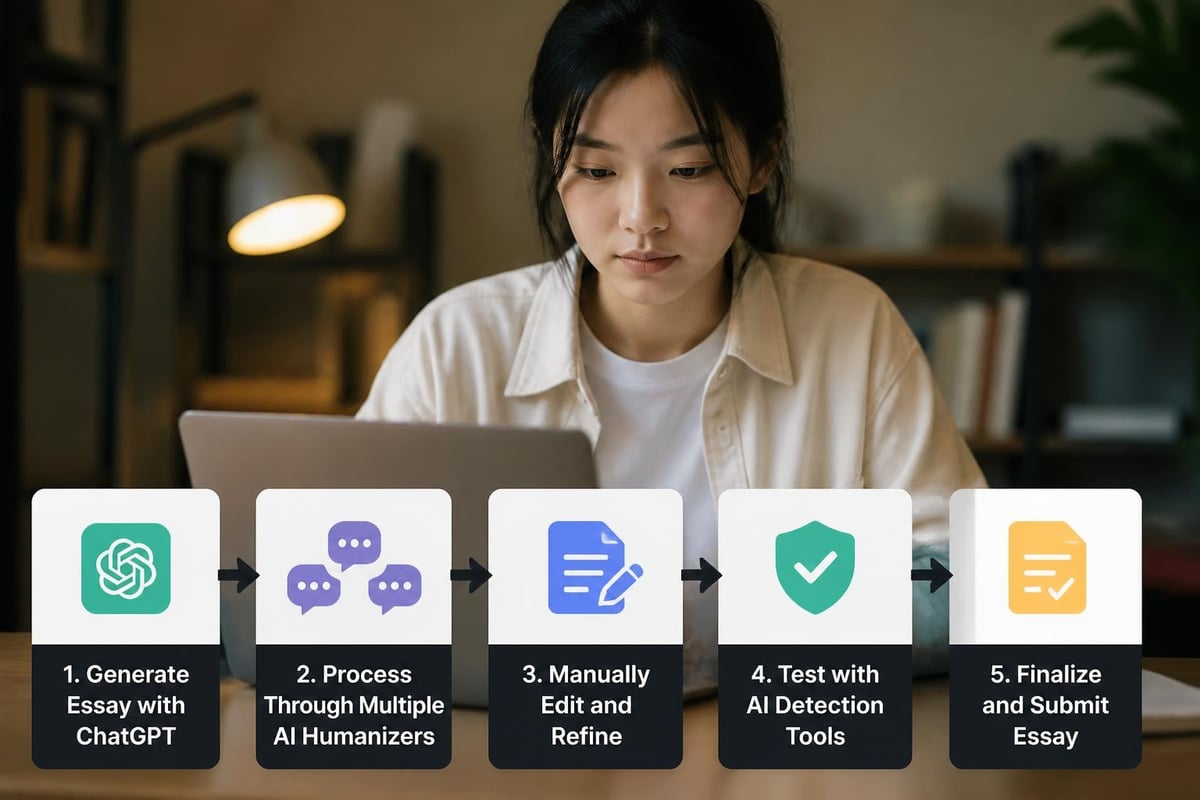
No single free humanizer excels across all dimensions. Sophisticated users employ multi-tool workflows:
Step 1: Generate initial content with ChatGPT using prompts for human-sounding AI writing
Step 2: Process through primary humanizer (best overall performance)
Step 3: Run output through secondary humanizer for pattern disruption
Step 4: Manual review and personalization pass
Step 5: Final detection check before submission
This layered approach significantly reduces detection risk while maintaining content quality and coherent argumentation.
Understanding the Limitations and Risks
Even the best free AI humanizer 2026 cannot guarantee absolute undetectability. Students must recognize inherent limitations and supplementary precautions necessary for submission safety.
False Sense of Security
Humanizers reduce but do not eliminate detection risk. Academic research on AI humanizer services demonstrates that sophisticated detection systems continue evolving to identify humanized content through meta-patterns.
Professors increasingly employ manual verification alongside automated detection. Inconsistent writing quality across submissions, sudden stylistic shifts, or content beyond demonstrated knowledge level trigger human review regardless of AI scores.
Content Quality Degradation
Aggressive humanization sometimes sacrifices clarity for undetectability. Free tools especially may introduce grammatical errors, logical inconsistencies, or awkward phrasing that undermines academic credibility.
Students must balance three competing priorities:
- Undetectability: Low AI detection scores
- Quality: Clear argumentation and proper grammar
- Authenticity: Voice matching previous submissions
Overemphasizing any single factor compromises the others. The most successful approach prioritizes quality, using humanization as enhancement rather than complete transformation.
Advanced Techniques for 2026 Detection Systems
As detection technology advances, humanization strategies must evolve correspondingly. Understanding 2026-specific detection methods enables more effective countermeasures.
Perplexity and Burstiness Manipulation
Modern detectors analyze text perplexity (word choice unpredictability) and burstiness (sentence length variation). AI writing typically exhibits low perplexity with uniform burstiness.
Effective humanizers increase both metrics by:
- Introducing unexpected vocabulary choices within appropriate context
- Alternating short, punchy sentences with complex, multi-clause constructions
- Varying paragraph lengths from single sentences to extended blocks
- Mixing formal academic language with conversational asides
These adjustments mirror natural human writing patterns that detection algorithms struggle to flag.
Contextual Coherence Preservation
Early humanizers sometimes destroyed logical flow in pursuit of undetectability. Modern tools maintain argumentative coherence while introducing surface-level variations.
| Quality Metric | Poor Humanization | Excellent Humanization |
|---|---|---|
| Thesis clarity | Often obscured | Fully preserved |
| Evidence flow | Randomly reordered | Logically maintained |
| Conclusion strength | Weakened or contradictory | Enhanced or equal |
| Citation integration | Disrupted formatting | Seamlessly retained |
Students should verify that humanized output maintains original argumentative structure even as phrasing transforms.
Comparing Free Versus Paid AI Humanizers
Understanding the differences between free and paid AI humanizers helps students make informed decisions about when investment becomes worthwhile.
Feature Differentiation
Premium platforms justify costs through expanded capabilities:
- Unlimited word processing: No segmentation for long papers
- Priority processing speeds: Instant results during high-traffic periods
- Advanced customization: Tone adjustment, formality calibration, style matching
- Batch processing: Multiple documents simultaneously
- API access: Integration with writing workflows
- Customer support: Direct assistance for problematic content
Free versions suffice for occasional use or shorter assignments. Students regularly submitting lengthy papers benefit from premium subscriptions despite costs.
Cost-Benefit Analysis for Students
Monthly subscription costs versus time investment creates the central calculation. Processing a 3000-word paper through free tools with 1000-word limits requires:
- Three separate processing sessions
- Manual recombination and transition smoothing
- Additional coherence review
- Total time investment: 25-35 minutes
Premium unlimited processing completes identical tasks in 3-5 minutes. For students submitting weekly papers, the time savings accumulates to 5-6 hours monthly, potentially justifying $20-30 subscription costs based on opportunity cost alone.

Integration with Academic Workflows
Successful AI humanizer deployment requires seamless integration into existing study and writing processes. Isolated tool usage produces inferior results compared to holistic workflow integration.
Strategic Timing for Humanization
When students humanize content significantly impacts results. Three primary timing strategies exist:
Early Humanization: Processing AI drafts immediately after generation allows extended manual refinement. This approach maximizes final quality but requires multiple editing passes.
Late Humanization: Waiting until after personal editing preserves student voice better. However, it risks introducing detectable AI patterns during revision.
Continuous Humanization: Processing content in stages as writing progresses. Most time-intensive but produces most authentic results by blending AI assistance with genuine student effort throughout development.
Students must experiment to identify optimal timing for their individual workflows and assignment types.
Maintaining Consistent Voice Across Submissions
Professors familiar with student writing styles notice sudden quality shifts or voice changes. The best free AI humanizer 2026 tools allow style calibration, but students must actively maintain consistency.
Effective strategies include:
- Creating personal style guides documenting typical sentence structures
- Reviewing previous submissions before humanizing new content
- Manually adjusting humanized output to match established patterns
- Avoiding dramatic quality improvements that trigger suspicion
- Gradually evolving writing sophistication across semester submissions
These precautions help humanized work blend naturally with authentic student writing history.
Ethical Considerations and Academic Integrity
While AI humanizers serve legitimate purposes, students must navigate complex ethical terrain surrounding their use. Understanding institutional policies and personal boundaries ensures responsible tool deployment.
Legitimate Use Cases
AI humanizers appropriately support learning when:
- Improving English language proficiency for non-native speakers
- Translating complex research into accessible explanations
- Overcoming writer's block by refining rough drafts
- Enhancing clarity of original ideas poorly expressed initially
- Learning writing techniques through comparison analysis
These applications use AI as educational scaffolding rather than wholesale replacement of critical thinking.
Problematic Applications
Humanizers undermine education when students:
- Submit entirely AI-generated content without comprehension
- Bypass learning objectives by avoiding writing practice
- Misrepresent understanding of course material
- Violate explicit instructor prohibitions on AI assistance
Educators increasingly recognize that teachers need to understand AI humanizers to develop appropriate policies balancing technology integration with learning integrity.
Future Developments in AI Humanization Technology
The trajectory of AI humanizer evolution suggests significant capability improvements throughout 2026 and beyond. Students should anticipate both opportunities and challenges as technology advances.
Emerging Detection Countermeasures
Next-generation humanizers will likely incorporate:
- Real-time detection testing: Instant verification against major platforms
- Adaptive learning: Systems improving through user feedback loops
- Stylometric matching: Automatic calibration to individual writing fingerprints
- Multimodal analysis: Accounting for discipline-specific writing conventions
- Blockchain verification: Authenticity certificates for legitimately human-written work
These advances will further blur lines between human and AI authorship, intensifying ongoing debates about academic assessment validity.
Regulatory and Institutional Responses
Universities are developing sophisticated responses to AI writing assistance. Anticipated developments include:
- Standardized AI use policies across academic departments
- Enhanced training for faculty in identifying humanized content
- Alternative assessment methods reducing writing submission reliance
- Required disclosure of AI assistance tools utilized
- Integration of AI literacy into curriculum requirements
Students must stay informed about evolving institutional expectations to navigate changing academic landscapes responsibly.
Practical Tips for Maximizing Success
Beyond tool selection, implementation details determine whether students achieve desired outcomes. These tactical recommendations improve results across all humanizer platforms.
Document Original Versions
Always retain unhumanized drafts for comparison and potential revision. This practice enables:
- Quality control through before-after analysis
- Recovery if humanization introduces errors
- Compliance with institutional requirements for draft submission
- Personal learning through pattern recognition
Simple file naming conventions like "Essay1_Original.docx" and "Essay1_Humanized.docx" prevent confusion and accidental submissions.
Test Before Crucial Submissions
Never use humanizers for the first time on high-stakes assignments. Practice runs on low-pressure work reveal:
- Platform-specific quirks and limitations
- Optimal input formatting for best results
- Necessary post-processing adjustments
- Personal workflow integration points
This experimentation prevents deadline disasters when submission windows close within hours.
Combine with Manual Editing
The most effective approach layers humanization with personal refinement. Recommended editing sequence:
- Structural review: Verify thesis, evidence, and conclusion coherence
- Voice adjustment: Ensure consistency with previous writing
- Factual verification: Confirm all claims and citations remain accurate
- Grammar polish: Correct any humanizer-introduced errors
- Authenticity check: Add personal insights and unique perspectives
This comprehensive approach produces work genuinely representing student understanding enhanced by technological assistance.
Staying Updated on Tool Performance
The best free AI humanizer 2026 landscape changes rapidly as platforms improve and new competitors emerge. Students benefit from regularly reassessing tool effectiveness.
Community Resources and Reviews
Student communities actively share experiences and test results. Valuable information sources include:
- Reddit communities like r/ChatGPT and r/college
- Discord servers focused on academic AI tools
- YouTube comparative reviews testing multiple platforms
- Independent blogs evaluating best free AI humanizer tools
- University-specific forums discussing local detection systems
Cross-referencing multiple sources provides balanced perspectives beyond marketing claims.
Performance Monitoring
Individual testing remains essential since results vary by writing style, subject matter, and detection system version. Simple monitoring involves:
- Monthly testing of preferred humanizer against current detectors
- Documenting changes in bypass rates over time
- Noting any new limitations or feature additions
- Comparing performance across different assignment types
- Tracking processing speed fluctuations during peak usage periods
This data-driven approach ensures students adapt strategies as technological landscape evolves.
Navigating the 2026 AI humanizer landscape requires balancing effectiveness, accessibility, and ethical considerations while understanding that no tool offers perfect solutions. Students who combine strategic tool selection with manual refinement, ethical boundaries, and continuous learning position themselves for academic success without compromising integrity. If you're looking for reliable AI humanization specifically optimized for academic submissions, GenZWrite offers purpose-built solutions trusted by over 100,000 students to transform AI-generated content into naturally flowing essays that consistently bypass detection systems.

Rita Jamal
AI Content Specialist
Relateted Articles

Students Are Getting Flagged for AI… Even When They Didn’t Use It
Students are facing a new academic crisis: being accused of using AI when they actually wrote the work themselves. As AI detectors like Turnitin and GPTZero struggle with high false-positive rates, even the best students are being unfairly flagged. Learn why academic clarity triggers these algorithms, the bias against non-native speakers, and how to use an AI humanizer to protect your GPA and your reputation from flawed software.

GenZWrite
GenZWrite official
The Definitive Guide to AI Humanization in 2026: GenZWrite vs. the Top 6 Tools
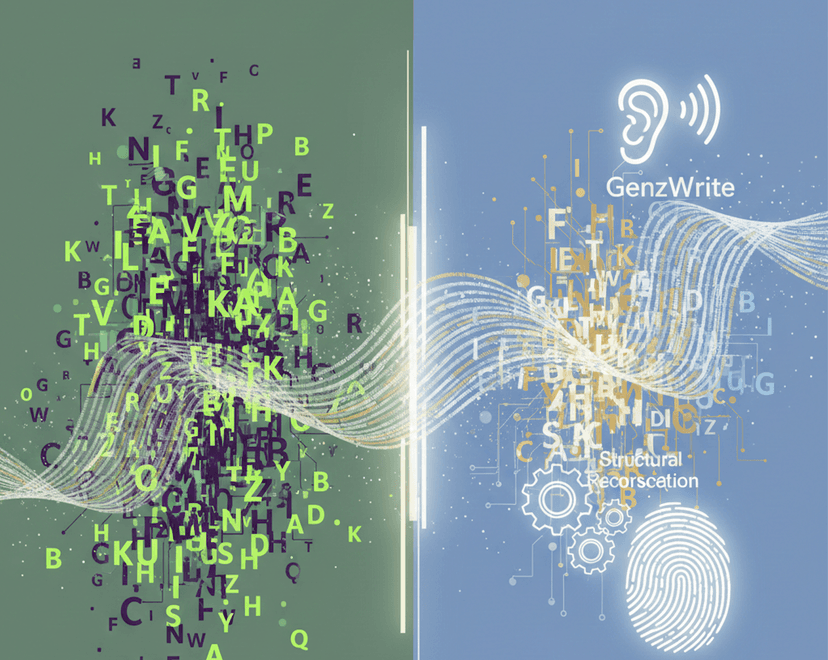
Discover the best AI humanizers of 2026. We compare GenZWrite against Phrasly, Humbot, and StealthWriter, Quillbot based on structural variety, tone control, and bypass reliability. Learn why structural reconstruction—not just synonym swapping—is the key to undetectable, professional writing this year
GenZWrite
GenZWrite official

The Best AI Humanizer for Turnitin in 2026
Turnitin doesn’t just look for "AI words"—it tracks the statistical fingerprint of your writing. In 2026, simple synonym swaps no longer work. This guide reveals the data-driven way to humanize your essays, bypass "burstiness" checks, and protect your academic reputation with tools that actually work.
GenZWrite
GenZWrite official
Humanize & Detect AI
Transform robotic AI text into natural, engaging content that passes detection and ranks higher.