Free vs Paid AI Humanizers: What Most Tests Don’t Tell

Not all AI humanizers are equal. See why free tools fail on essays and which paid options produce safer, more natural writing.
Passing an AI detector isn’t the same as writing well.
If you’ve compared free and paid AI humanizers, you’ve probably seen screenshots claiming “0% AI detected” or “fully human.” On the surface, both options can look equally effective.
But those quick tests rarely show the full story.
In real-world writing — essays, reports, SEO articles, or professional content — reliability, clarity, and consistency matter far more than a single detection score.
Let’s break down what these tests actually measure… and what they quietly ignore.
1. What Most AI Humanizer Tests Really Measure
Most comparisons follow the same simple formula:
- Paste a short paragraph
- Run one detector
- Check the score
- Declare a winner
That sounds scientific, but it’s extremely limited.
Short samples hide weaknesses
Tests usually use 100–200 words. Short text is easy to manipulate because randomness alone can disrupt AI patterns.
But once the content gets longer — 1,000+ words, multiple arguments, structured ideas — many tools fall apart.
One detector ≠ real safety
Different AI detectors look for different signals.
Passing one tool doesn’t mean you’ll pass others. A piece of text might:
- Pass Detector A
- Flag on Detector B
- Fail after a model update
A single score tells you almost nothing about long-term reliability.
Detection ≠ quality
Detectors analyze statistical patterns, not readability.
Text can score “human” and still be:
- awkward
- confusing
- repetitive
- unnatural
And that’s exactly where many free tools struggle.
Bottom line:
"Most tests only show how a tool performs on one short sample at one moment in time — not how it performs in the real world"
2. Why Free AI Humanizers Look Impressive at First
Free tools often feel surprisingly good during quick demos. There’s a reason for that.
They rewrite aggressively
Most free humanizers rely on:
- heavy synonym swapping
- sentence shuffling
- random phrasing changes
This instantly breaks predictable AI patterns — which can temporarily lower detection scores.
On short text, that’s often enough to “pass.”
But randomness isn’t human writing
The problem? Random variation doesn’t equal natural writing.
You often get:
- broken flow
- inconsistent tone
- strange word choices
- lost meaning
It looks human to an AI detector, but not to an actual reader.
Results are inconsistent
Free tools also lack stability.
Run the same text twice and you may get completely different quality levels. That unpredictability becomes risky in academic or professional settings.
So yes — free tools can look great at first.
But that success usually comes from short-term pattern disruption, not true humanization.
3. What Paid AI Humanizers Do Differently
Paid AI humanizers are built with a different goal.
Instead of “tricking” detectors, they aim to improve the writing itself.
That distinction changes everything.
Structural rewriting, not surface edits
Rather than just swapping words, better tools:
- vary sentence rhythm naturally
- re-organize ideas logically
- break robotic paragraph structures
- preserve flow and clarity
This mirrors how humans actually write.
Meaning stays intact
Professional and academic writing requires precision.
Paid tools focus on:
- preserving intent
- keeping arguments accurate
- maintaining tone
- avoiding meaning drift
Free tools often rewrite blindly. Paid ones are context-aware.
Built for long-form content
Long essays and articles expose weak tools quickly.
Higher-quality humanizers are designed to handle:
- full reports
- research papers
- multi-section blogs
- on-going content production
Consistency across paragraphs is where they shine.
More resilient across detectors
Instead of optimizing for one detector, paid tools reduce broader “machine-like” signals. That makes results more stable even when detection systems update.
4. Detection Scores vs Writing Quality (The Big Misunderstanding)
Here’s where many people get it wrong:
Low AI score ≠ good writing
Detection tools don’t measure:
- clarity
- logic
- persuasion
- tone
- readability
They only measure probability patterns.
So chasing scores often backfires.
Writers may:
- over-edit natural sentences
- force weird variation
- add unnecessary complexity
Ironically, this makes the text worse for humans.
Quality reduces risk naturally
Well-written human content tends to pass detectors as a side effect.
Not because it’s optimized for scores — but because natural writing is less predictable.
That’s why focusing on quality first is always the smarter strategy.
5. When a Free AI Humanizer Is Actually Fine
Free tools aren’t useless. They just have the right context.
They work best for:
- personal drafts
- brainstorming
- casual notes
- social captions
- rough rewrites
Basically: low-stakes content.
If credibility or accuracy doesn’t matter much, free tools can save time.
Just don’t expect professional-level reliability.
6. When a Paid AI Humanizer Makes More Sense
As soon as the stakes go up, quality matters more than price.
Paid tools are worth it for:
- essays and assignments
- academic writing
- client work
- SEO articles
- brand content
- business communication
In these cases, awkward or suspicious writing can cost far more than a small subscription.
Consistency, clarity, and credibility become non-negotiable.
7. Conclusion
- Free AI humanizers optimize for quick wins.
- Paid AI humanizers optimize for sustainable quality.
That’s the real difference.
If you just need a quick rewrite, free tools can work.
But if your writing represents you, your grades, or your brand, reliability matters more than saving a few dollars.
And reliability comes from improving the writing itself — not gaming a detector score.

Rita Jamal
AI Content Specialist
Relateted Articles

AI in Academia: How to Humanize Student Writing Without Losing Your Voice
Discover how students can use AI in academic writing while preserving originality, tone, and personal voice—without triggering AI detectors
Rita Jamal
AI Content Specialist

Bypass ChatGPT Detectors: Smart Essay Writing Strategies for the Modern Student
Learn how to use AI tools like ChatGPT responsibly in academic writing. This guide explores how AI detectors work, why they matter, and practical strategies to write authentic, human-sounding essays without risking integrity or originality.
Rita Jamal
AI Content Specialist
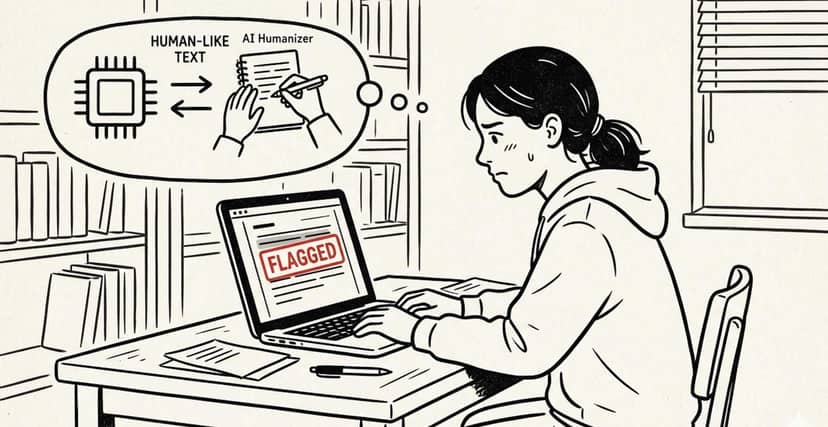
Why Students Are Searching for an AI Humanizer More Than Ever During Finals Season
Finals stress now comes with a new threat: AI detectors flagging honest student essays. With false positives hitting non-native speakers hardest and real academic consequences on the line, students are turning to AI humanizers to protect their work. Here is what they actually need from these tools in 2026.
Rita Jamal
AI Content Specialist
Humanize & Detect AI
Transform robotic AI text into natural, engaging content that passes detection and ranks higher.