AI to Human: Transform AI Writing Into Authentic Content

Discover how ai to human tools transform AI-generated content into authentic writing. Learn strategies students use to humanize essays in 2026.
The rapid advancement of artificial intelligence has created a unique challenge for students and content creators in 2026. While AI writing tools like ChatGPT generate content in seconds, the output often lacks the authenticity and natural flow of human writing. This gap has sparked a growing need for ai to human transformation-the process of converting AI-generated text into content that reads as genuinely human-authored. For college students navigating strict AI detection policies, understanding how to bridge the gap between artificial and authentic writing has become essential for academic success.
Understanding the AI to Human Transformation Process
Converting ai to human text involves more than simple paraphrasing or word substitution. The process requires a deep understanding of how AI writing differs from human composition and what makes text appear authentically human.
Core Differences Between AI and Human Writing
AI-generated content exhibits distinct patterns that differentiate it from human writing. These patterns include consistent sentence structure, predictable vocabulary choices, and an absence of personal voice. Human writers naturally vary their rhythm, inject personality, and make intuitive decisions that AI models struggle to replicate.
Recent research demonstrates that AI can establish interpersonal closeness in emotionally engaging interactions, particularly when labeled as human, suggesting the gap between artificial and authentic communication continues to narrow. However, detection systems have evolved alongside generation capabilities.
Key markers that distinguish AI from human writing include:
Perplexity levels: AI maintains consistent predictability while humans vary wildly
Burstiness patterns: Human writing alternates between short and long sentences
Contextual awareness: Authentic writing references current events and personal experiences
Emotional depth: Genuine human text carries subtle emotional undertones
Imperfection: Human writers make minor inconsistencies that AI avoids

Why Students Need AI to Human Conversion
The academic landscape has transformed dramatically with the widespread adoption of AI detection systems. Universities now deploy sophisticated tools like Turnitin, which scan every submission for AI-generated content. Understanding how professors spot AI essays in 2026 reveals the high stakes students face.
Academic Integrity and Detection Systems
Students using AI writing assistants face a challenging dilemma. They need efficiency without sacrificing authenticity. The ai to human transformation becomes critical when AI detectors flag legitimate work or when ChatGPT-assisted essays need refinement before submission.
Detection System | Accuracy Rate | Common False Positive Triggers |
|---|---|---|
Turnitin AI | 87-92% | Formal academic language, ESL writing |
GPTZero | 85-90% | Technical vocabulary, structured arguments |
Copyleaks | 88-93% | Citation-heavy content, standardized formatting |
The pressure intensifies during finals season when students search for reliable ai to human solutions to meet tight deadlines while maintaining academic standards.
Effective Strategies for AI to Human Transformation
Converting artificial text into authentic human writing requires strategic intervention at multiple levels. Professional approaches combine technical understanding with creative refinement.
Manual Humanization Techniques
The foundation of effective ai to human conversion begins with manual editing. Students who understand these principles can significantly improve their work's authenticity.
Voice and tone adjustment represents the first critical step. AI typically adopts a neutral, formal register. Human writers inject personality through word choice, sentence rhythm, and subtle opinions. Reading content aloud reveals unnatural phrasing that requires revision.
Structural variation breaks AI's predictable patterns. While AI alternates between topic sentences and supporting details mechanically, human writers create dynamic paragraph structures. Mix short punchy statements with complex, nuanced explanations.
Identify repetitive sentence openings and restructure
Replace generic transitions with context-specific connectors
Vary paragraph length intentionally between 2-6 sentences
Insert personal observations or rhetorical questions
Add specific examples rather than generic illustrations
Experts emphasize that AI's greatest power lies in amplifying human potential rather than replacing human creativity entirely.
Advanced Humanization Approaches
Beyond surface-level editing, sophisticated ai to human transformation addresses deeper linguistic patterns. These advanced techniques produce content that withstands rigorous AI detection scrutiny.
Contextual personalization grounds writing in authentic experience. Reference current events from 2026, mention specific campus situations, or connect ideas to trending topics. AI lacks genuine temporal awareness and real-world grounding.
Emotional intelligence integration separates human from artificial writing. Express genuine uncertainty, acknowledge complexity, or demonstrate evolving thought processes. These authentic human qualities resist AI replication.
Microsoft Research provides comprehensive guidelines for human-AI interaction that emphasize preserving authentic human elements throughout the creative process.

Technical Solutions for AI to Human Conversion
While manual techniques provide control, dedicated tools streamline the ai to human transformation process. These platforms employ sophisticated algorithms designed specifically to bypass detection systems.
How AI Humanizer Tools Function
Modern humanization platforms analyze text at the linguistic level, identifying patterns that trigger detection systems. They reconstruct sentences while preserving original meaning, creating output that maintains academic quality while appearing authentically human.
The technology operates through several mechanisms:
Syntactic restructuring: Reorganizes sentence components without changing meaning
Lexical variation: Replaces common AI vocabulary with natural alternatives
Stylistic modeling: Applies human writing patterns from extensive datasets
Detection evasion: Tests output against major AI detection systems
For students managing tight deadlines, GenZWrite offers instant transformation that converts ChatGPT essays into undetectable, naturally human content while maintaining academic standards and original arguments.
Evaluating Humanization Quality
Not all ai to human tools deliver equivalent results. Students need frameworks for assessing output quality before submission.
Detection resistance remains the primary metric. Quality tools should consistently bypass Turnitin, GPTZero, and Copyleaks without triggering flags. Testing tools through AI detector verification provides essential confidence before submission.
Academic voice preservation ensures the humanized content maintains appropriate scholarly tone. The output should sound like a knowledgeable student, not a professional writer or obvious AI.
Originality maintenance verifies that humanization doesn't introduce plagiarism. The transformation should restructure phrasing while keeping original ideas intact.
Quality Factor | Assessment Method | Acceptable Threshold |
|---|---|---|
Detection Score | Multiple AI detectors | Below 20% AI probability |
Readability | Flesch-Kincaid grade level | 11-14 (college appropriate) |
Voice Consistency | Tone analysis tools | Matches student writing samples |
Plagiarism Check | Turnitin similarity index | Under 15% similarity |
Common Challenges in AI to Human Conversion
Students frequently encounter obstacles when transforming AI content into authentic human writing. Recognizing these challenges enables more effective solutions.
Over-Humanization and Quality Loss
Aggressive humanization sometimes degrades content quality. Excessive paraphrasing introduces grammatical errors, weakens arguments, or creates unclear phrasing. The goal involves authentic human voice, not degraded writing.
Balance precision with naturalness. Academic writing requires clarity and rigor. Humanization shouldn't sacrifice coherent argumentation for informal tone. Maintain thesis strength while adjusting superficial patterns.
Understanding why teachers detect AI writing helps students identify which elements require modification versus which should remain structured and formal.
Maintaining Subject Matter Expertise
AI to human transformation must preserve subject-specific knowledge and terminology. Converting a biochemistry essay requires maintaining technical accuracy while adjusting general phrasing patterns.
Domain-specific vocabulary often appears AI-like due to precision and formality. Don't replace accurate scientific terms with vague alternatives. Instead, adjust surrounding explanatory text, transitions, and examples.
Research indicates that AI agents adopting human-like communication styles perform better at complex tasks, suggesting that natural communication patterns enhance rather than diminish intellectual content.

Best Practices for Student Success
College students need reliable workflows that integrate ai to human transformation into their academic writing process without compromising integrity or quality.
Developing a Sustainable Writing Workflow
Effective ai to human practices begin with understanding AI's role as a starting point rather than final product. Successful students use AI for brainstorming, outlining, and draft development, then apply humanization before submission.
Optimal workflow sequence:
Generate initial content using ChatGPT or similar tools
Review for factual accuracy and argument strength
Apply ai to human transformation techniques or tools
Personalize with specific examples and authentic voice
Verify through AI detection systems before submission
Perform final proofreading for natural flow
This approach leverages AI efficiency while ensuring authentic human authorship. Students learn to recognize when content needs tone and writing style adjustments for different academic contexts.
Ethical Considerations and Academic Honesty
The ai to human conversation intersects with complex ethical questions about authorship, originality, and academic integrity. Students must navigate institutional policies while utilizing available tools responsibly.
Transparency with AI assistance varies by institution. Some universities permit AI as a research tool; others prohibit any AI involvement. Understanding specific course policies prevents unintentional violations.
Intellectual contribution remains essential. Even with ai to human tools, students should contribute genuine understanding, critical analysis, and personal insights. The technology refines expression rather than replacing thought.
Exploring how to avoid AI detection ethically provides students with frameworks for responsible AI integration that respects academic standards while leveraging technological advantages.
The Future of AI to Human Technology
As we progress through 2026, ai to human transformation technology continues evolving alongside detection systems. Understanding emerging trends helps students prepare for changing academic landscapes.
Advancements in Natural Language Processing
Current ai to human tools employ increasingly sophisticated neural networks that model authentic human writing patterns. These systems analyze millions of human-authored texts to identify subtle characteristics that distinguish genuine human composition.
Voice cloning capabilities now extend beyond audio into writing style. Advanced platforms can analyze a student's previous work and apply consistent voice patterns to humanized content. This personalization creates output matching individual writing signatures rather than generic human patterns.
The technology demonstrating that AI voices are indistinguishable from human voices suggests similar convergence occurring in text generation and humanization.
Evolving Detection System Responses
AI detection companies continuously update algorithms to identify humanization patterns. This creates an ongoing technological competition between generation, humanization, and detection.
Multi-modal analysis represents the detection frontier. Systems now examine writing patterns alongside submission metadata, typing patterns, and revision histories. Understanding these comprehensive approaches helps students appreciate why quality ai to human transformation requires sophisticated solutions.
Microsoft's research on building effective human-AI interaction emphasizes designing systems that enhance rather than replace human capabilities, suggesting future tools will integrate more seamlessly into authentic creative processes.
Practical Implementation for Different Academic Contexts
AI to human transformation requirements vary significantly across academic disciplines, assignment types, and institutional expectations. Tailoring approaches to specific contexts improves results.
Discipline-Specific Humanization Strategies
STEM writing requires preserving technical precision while humanizing explanatory content. Focus transformation efforts on introductions, transitions, and analysis sections rather than methodology or results. Mathematical proofs and chemical equations remain unchanged; surrounding discussion becomes more conversational.
Humanities essays benefit from extensive humanization across all sections. Literary analysis, historical arguments, and philosophical discussions should demonstrate personal engagement, interpretive nuance, and evolving perspective development.
Social sciences fall between technical and interpretive extremes. Maintain research methodology formality while humanizing theoretical discussions, literature reviews, and implications sections.
Academic Field | Humanization Priority Areas | Preserve Formal Structure |
|---|---|---|
STEM | Context, implications, discussions | Methods, data, equations |
Humanities | Analysis, interpretation, voice | Citations, direct quotes |
Social Sciences | Theory, literature review | Research design, statistics |
Business | Case analysis, recommendations | Financial data, frameworks |
Assignment Type Considerations
Different academic formats require distinct ai to human approaches. Research papers demand more formal register than reflection essays or discussion posts.
Research papers need scholarly tone preservation during humanization. Focus on varying sentence structure and adding transitional sophistication rather than introducing casual language.
Argumentative essays benefit from passionate voice injection. Humanize by strengthening persuasive elements, adding rhetorical questions, and demonstrating conviction.
Creative assignments permit maximum humanization flexibility. Personal narratives, creative writing, and reflective pieces should exhibit distinctive voice, emotional authenticity, and stylistic variation.
Learning effective techniques to humanize AI content provides students with versatile skills applicable across diverse academic requirements and writing contexts.
Managing the Transition from AI Detection to Acceptance
The academic community's relationship with AI writing tools continues evolving. Understanding this transition helps students navigate current requirements while preparing for future expectations.
Institutional Policy Variations
Universities adopt vastly different approaches to AI writing assistance. Some prohibit all AI involvement, others permit AI for brainstorming but not drafting, while progressive institutions teach AI literacy as essential skill development.
Policy awareness prevents accidental violations. Students should verify course syllabi, consult professors about AI guidelines, and understand whether ai to human transformation aligns with specific assignment parameters.
Documentation practices provide protection against false positives. Maintaining drafts, research notes, and revision histories demonstrates genuine intellectual engagement even when final submission triggers detection concerns.
Research on false positive AI detection affecting honest students highlights why understanding institutional appeal processes matters as much as prevention strategies.
Developing Long-Term Writing Skills
While ai to human tools provide immediate solutions, developing authentic writing abilities ensures sustained academic success. Technology should supplement rather than replace skill development.
Practice authentic composition regularly. Set aside AI tools for some assignments to maintain genuine writing muscles. The ability to produce quality work without technological assistance remains valuable.
Analyze humanization patterns to internalize natural writing rhythms. Understanding why certain transformations improve authenticity builds intuitive writing skills that become automatic over time.
Seek feedback from professors, writing centers, and peers. Human readers provide insights AI cannot replicate, helping develop voice and style that naturally resist detection without technological intervention.
Exploring comprehensive guides on how AI humanizers work educates students about transformation mechanics, empowering more informed tool usage and skill development simultaneously.
Mastering ai to human transformation empowers students to leverage AI efficiency while maintaining academic integrity and authenticity. The key lies in understanding both the technology and the human writing elements that resist artificial replication. Whether you're refining ChatGPT-generated drafts or seeking to bypass detection systems entirely, GenZWrite provides instant, reliable transformation that converts AI content into naturally human academic writing trusted by over 100,000 U.S. students. Transform your essays with confidence and submit work that reflects your authentic voice every time.

Rita Jamal
AI Content Specialist
Relateted Articles

Students Are Getting Flagged for AI… Even When They Didn’t Use It
Students are facing a new academic crisis: being accused of using AI when they actually wrote the work themselves. As AI detectors like Turnitin and GPTZero struggle with high false-positive rates, even the best students are being unfairly flagged. Learn why academic clarity triggers these algorithms, the bias against non-native speakers, and how to use an AI humanizer to protect your GPA and your reputation from flawed software.

GenZWrite
GenZWrite official
The Definitive Guide to AI Humanization in 2026: GenZWrite vs. the Top 6 Tools
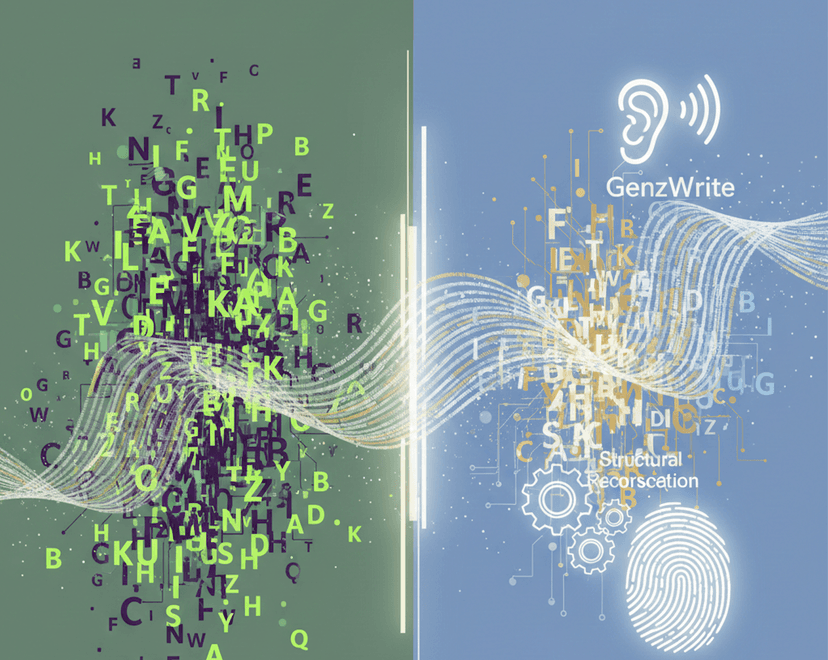
Discover the best AI humanizers of 2026. We compare GenZWrite against Phrasly, Humbot, and StealthWriter, Quillbot based on structural variety, tone control, and bypass reliability. Learn why structural reconstruction—not just synonym swapping—is the key to undetectable, professional writing this year
GenZWrite
GenZWrite official

The Best AI Humanizer for Turnitin in 2026
Turnitin doesn’t just look for "AI words"—it tracks the statistical fingerprint of your writing. In 2026, simple synonym swaps no longer work. This guide reveals the data-driven way to humanize your essays, bypass "burstiness" checks, and protect your academic reputation with tools that actually work.
GenZWrite
GenZWrite official
Humanize & Detect AI
Transform robotic AI text into natural, engaging content that passes detection and ranks higher.