AI Text Tool: What Students Need to Know in 2026

Discover how AI text tools transform academic writing in 2026. Learn features, benefits, and smart usage tips for college students.
The landscape of academic writing has transformed dramatically with the emergence of artificial intelligence technologies. An ai text tool represents a revolutionary software application that uses machine learning and natural language processing to generate, edit, or enhance written content automatically. For college students in 2026, understanding how these tools function and their appropriate applications has become essential knowledge. These platforms range from simple grammar checkers to sophisticated systems capable of producing entire essays, research papers, and creative assignments. As universities adapt their detection methods and academic integrity policies, students face crucial decisions about when and how to leverage AI assistance responsibly.
Understanding How AI Text Tools Actually Work
Modern ai text tool platforms operate through complex neural networks trained on billions of text examples from across the internet. These systems analyze patterns in language, including sentence structure, vocabulary choices, context, and stylistic conventions. When a student inputs a prompt or request, the algorithm predicts the most statistically likely words and phrases to follow based on its training data.
The core components include:
- Natural language processing engines that interpret user requests
- Transformer models that understand context across long passages
- Probability algorithms that select appropriate word sequences
- Fine-tuning mechanisms that adapt output to specific tasks
The evolution of text generation has accelerated significantly since 2023, with models becoming increasingly sophisticated at mimicking human writing patterns. However, this advancement creates distinct challenges for academic environments where originality and critical thinking remain paramount.
The Technology Behind Modern Text Generation

At the foundation of every ai text tool lies a transformer architecture that processes information differently than older machine learning approaches. These systems don't simply match keywords or follow rigid templates. Instead, they develop nuanced understanding of language relationships through self-attention mechanisms that weigh the importance of different words in relation to each other.
Recent research on text generation techniques demonstrates how pre-trained models like GPT-2 and its successors achieve remarkable performance across diverse writing tasks. The technology examines millions of parameters simultaneously to determine optimal word choices, maintaining coherence across paragraphs while adapting tone and complexity to match the intended audience.
| Generation Aspect | Traditional Software | Modern AI Tools |
|---|---|---|
| Context Understanding | Limited to keywords | Deep semantic analysis |
| Output Variety | Template-based | Genuinely creative responses |
| Tone Adaptation | Manual settings | Automatic style matching |
| Learning Capability | Static rules | Continuous improvement |
The practical implication for students is that these tools produce increasingly convincing text that can be difficult to distinguish from human writing. This reality has prompted institutions to develop sophisticated detection methods that analyze writing patterns for telltale AI signatures.
Primary Features Students Should Expect
When evaluating any ai text tool for academic purposes, specific capabilities determine its practical usefulness. Not all platforms offer identical functionality, and understanding these distinctions helps students select appropriate tools for their needs.
Content Generation Capabilities
The most visible feature involves creating original text from prompts or outlines. Advanced platforms can:
- Generate complete essays from topic descriptions and thesis statements
- Expand bullet points into fully developed paragraphs with supporting details
- Create research summaries that synthesize information from multiple sources
- Produce creative content including narratives, analyses, and argumentative pieces
- Adapt complexity levels to match different academic requirements
Many students discover these capabilities when seeking assistance with essay writing, particularly during high-pressure deadline situations. The technology excels at producing coherent first drafts that address assignment requirements, though the output typically requires significant refinement.
Editing and Enhancement Functions
Beyond pure generation, modern ai text tool platforms incorporate sophisticated editing features. These functions analyze existing text and suggest improvements across multiple dimensions:
- Grammar and syntax corrections that identify and fix mechanical errors
- Style refinement that adjusts tone, formality, and voice consistency
- Clarity improvements that eliminate ambiguous phrasing and complex structures
- Vocabulary enhancement that replaces basic words with more precise alternatives
The systematic review of text generation tasks categorizes these editing functions as distinct from creation tasks, noting that they require different algorithmic approaches and training methodologies.
Common Applications in Academic Settings

Students utilize ai text tool platforms across numerous scenarios throughout their college careers. Understanding these applications helps contextualize the technology's role in modern education.
Research and Brainstorming Support
The initial stages of any writing project often present the greatest challenges. AI tools assist students by:
- Generating topic ideas and research questions from broad subject areas
- Creating detailed outlines that organize arguments logically
- Suggesting relevant examples and supporting evidence for thesis statements
- Identifying counterarguments and alternative perspectives to address
This brainstorming assistance can be particularly valuable for students experiencing writer's block or struggling to narrow broad topics into focused thesis statements. The technology serves as an ideation partner, though students must evaluate suggestions critically rather than accepting them uncritically.
Draft Creation and Revision
Many students employ ai text tool platforms during the drafting phase, using them to overcome initial writing inertia. The technology quickly produces content that students can then revise, personalize, and enhance with their unique perspectives and research insights.
However, submissions of AI-generated text without significant modification raise serious academic integrity concerns. Universities increasingly employ detection systems that identify AI-written content, creating risks for students who submit machine-generated work directly.
The more sophisticated approach involves using AI for initial drafts, then substantially rewriting the content to incorporate personal voice, specific examples from coursework, and critical analysis that demonstrates genuine understanding. Students who simply copy AI output miss opportunities to develop essential writing skills and risk serious academic consequences.
Critical Limitations Students Must Understand
Despite impressive capabilities, every ai text tool exhibits significant limitations that affect its reliability for academic work. Recognizing these constraints prevents over-reliance and helps students use the technology appropriately.
Accuracy and Factual Reliability Issues
AI systems generate text based on pattern recognition, not factual knowledge or understanding. This fundamental characteristic creates several problems:
- Fabricated citations that reference non-existent sources convincingly
- Outdated information reflecting training data cutoff dates rather than current knowledge
- Confident incorrectness where the tool presents false information authoritatively
- Contextual misunderstandings that miss nuanced assignment requirements
The data augmentation approaches used to train these models prioritize linguistic plausibility over factual accuracy, meaning the output sounds authoritative even when completely wrong.
| Limitation Type | Impact on Students | Mitigation Strategy |
|---|---|---|
| False Citations | Academic misconduct flags | Verify every source independently |
| Outdated Facts | Incorrect information | Cross-reference with current materials |
| Shallow Analysis | Weak critical thinking | Add personal insights and interpretations |
| Generic Content | Low originality scores | Incorporate specific course examples |
Detection and Academic Integrity Concerns
Universities have invested heavily in tools that identify AI-generated text, creating significant risks for students who submit machine-written work. These detection systems analyze writing patterns including sentence structure uniformity, vocabulary patterns, and stylistic consistency that commonly appear in AI output.
Students caught submitting AI-generated work face consequences ranging from failed assignments to expulsion, depending on institutional policies and violation severity. The technology's detection has become sophisticated enough that even modified AI text often triggers flags, particularly when students make only superficial changes.
Ethical Usage Guidelines for Academic Success
Navigating ai text tool usage responsibly requires understanding both institutional policies and broader ethical principles governing academic work. The federal guidelines on AI usage emphasize transparency, attribution, and human oversight as core principles.
Acceptable vs. Prohibited Applications
Appropriate uses include:
- Generating topic ideas and research questions for further exploration
- Creating initial outlines to organize thoughts before writing
- Checking grammar and identifying potential style improvements
- Brainstorming counterarguments to strengthen analytical papers
- Summarizing research for personal study notes (not submitted work)
Prohibited applications involve:
- Submitting AI-generated text as original work without disclosure
- Using AI to complete take-home exams or assessments
- Generating research paper content without substantial human revision
- Replacing genuine research and critical thinking with automated output
The distinction centers on whether the ai text tool serves as a thinking aid that enhances learning or a replacement for actual intellectual engagement with course material.
Transparency and Disclosure Practices
Many institutions now require students to properly cite and acknowledge when AI tools contribute to their work. This disclosure typically involves explaining which aspects of the assignment involved AI assistance and how that assistance was incorporated.
Transparency protects students from academic integrity violations while allowing legitimate use of technology as a learning support. As policies evolve throughout 2026, students should consult current institutional guidelines and ask professors directly about acceptable AI usage in specific courses.
Selecting the Right Tool for Your Needs
The ai text tool marketplace has expanded dramatically, offering students dozens of platforms with varying capabilities, pricing structures, and features. Making informed choices requires understanding key selection criteria.
Feature Comparison Considerations
When evaluating different platforms, students should assess:
- Output quality including coherence, relevance, and sophistication level
- Customization options for tone, style, and complexity adjustments
- Detection resistance and how recognizable the output is to AI detectors
- Ease of use and interface design that streamlines the writing process
- Pricing structure including free tiers, subscription costs, and usage limits
Students specifically concerned about bypassing AI detection systems often seek platforms that specialize in humanizing AI-generated content, though this raises significant ethical questions about deception and academic honesty.
Integration with Academic Workflows

The most effective ai text tool implementations integrate seamlessly with existing academic processes rather than replacing them entirely. Students should consider how any platform fits within their broader workflow:
- Research and source gathering using library databases and academic search engines
- Note-taking and synthesis using personal documentation methods
- Outline development using AI brainstorming support
- Draft creation combining AI assistance with personal writing
- Revision and editing using both AI suggestions and peer feedback
- Citation management using dedicated tools like Zotero or Mendeley
- Final proofreading using grammar checkers and human review
This integrated approach maintains the learning benefits of genuine engagement while leveraging technology for efficiency improvements where appropriate.
The Evolution of AI Detection Technology
As ai text tool capabilities advance, detection technologies simultaneously become more sophisticated. This ongoing arms race significantly impacts how students can safely use AI assistance without triggering academic integrity violations.
Current Detection Methodologies
Modern AI detectors employ multiple analysis techniques simultaneously:
- Perplexity measurement that identifies unnaturally consistent sentence complexity
- Burstiness analysis that detects the absence of natural variation in sentence length and structure
- Stylistic fingerprinting that recognizes common AI writing patterns and phrases
- Comparative analysis that examines how submitted work differs from a student's previous writing
Universities frequently use platforms like Turnitin, which has integrated AI detection capabilities specifically designed to flag machine-generated academic content. These systems analyze billions of data points to distinguish human writing from AI output with increasing accuracy.
False Positive Concerns
An important consideration involves the frequency of false positives where detectors incorrectly flag genuine human writing as AI-generated. This issue particularly affects international students, neurodivergent writers, and others whose natural writing styles may differ from detector training data expectations.
Students wrongly accused face stressful appeals processes and potential grade impacts even when completely innocent. This reality underscores the importance of maintaining drafts, outlines, and revision histories that document authentic writing processes.
Advanced Applications Beyond Basic Generation
Sophisticated users explore ai text tool capabilities that extend beyond simple content creation, leveraging the technology for specialized academic tasks that enhance learning outcomes.
Research Synthesis and Literature Review Support
Graduate students and advanced undergraduates use AI tools to process large volumes of research literature efficiently. The technology can:
- Summarize multiple academic articles to identify common themes and contradictions
- Generate comparative analyses highlighting different methodological approaches
- Create synthesis matrices organizing research findings across studies
- Identify research gaps and potential dissertation topics
These applications require significant human oversight to ensure accuracy, but they substantially reduce the time needed for literature review processes when used as research aids rather than primary analysis tools.
Multilingual Writing Support
International students often leverage ai text tool platforms to bridge language gaps, using them to refine English phrasing while maintaining their original ideas. This application can be particularly valuable when:
- Translating complex ideas from native languages into academic English
- Identifying grammatical patterns that differ between languages
- Learning discipline-specific vocabulary and conventions
- Understanding how to structure arguments in American academic formats
However, students should recognize that these tools don't replace genuine language learning and may introduce errors when translating specialized technical or disciplinary terminology.
Future Trends Shaping AI Writing Technology
The ai text tool landscape continues evolving rapidly, with several emerging trends likely to impact student usage patterns throughout 2026 and beyond.
Increased Personalization and Adaptation
Next-generation platforms incorporate adaptive learning that adjusts to individual writing styles over time. These systems analyze a student's previous work to generate output that matches their natural voice, vocabulary level, and structural preferences more closely.
This personalization creates both opportunities and risks. While it potentially produces more authentic-sounding content, it also makes detection more challenging and raises questions about where AI assistance ends and genuine authorship begins.
Enhanced Multimodal Capabilities
Emerging ai text tool platforms integrate multiple content types beyond pure text, including:
- Image analysis and description for visual rhetoric assignments
- Data visualization generation from statistical information
- Audio transcription and summarization for research interviews
- Video content analysis and critique generation
These multimodal capabilities expand AI's utility across diverse academic disciplines while introducing new ethical considerations about appropriate usage boundaries.
Institutional Integration and Policy Development
Many universities are developing official ai text tool integrations rather than prohibiting usage entirely. These institutionally sanctioned platforms often include:
- Built-in usage tracking that documents how students employ AI assistance
- Automatic disclosure features that notify instructors about AI contributions
- Customizable restrictions that align with specific assignment requirements
- Educational modules teaching responsible AI usage principles
This shift toward managed integration rather than outright prohibition reflects growing recognition that AI technologies will remain permanent fixtures in academic and professional environments.
Understanding ai text tool capabilities, limitations, and ethical implications empowers students to make informed decisions about technology usage in their academic work. The key lies in leveraging these platforms as learning supports rather than shortcuts, maintaining intellectual honesty while developing genuine writing skills that serve long-term career success. For students seeking to ensure their AI-assisted work passes academic scrutiny, GenZWrite offers specialized humanization technology trusted by over 100,000 U.S. students to transform AI-generated content into natural, undetectable academic writing that bypasses Turnitin and other detection systems with confidence.

Rita Jamal
AI Content Specialist
Relateted Articles

Students Are Getting Flagged for AI… Even When They Didn’t Use It
Students are facing a new academic crisis: being accused of using AI when they actually wrote the work themselves. As AI detectors like Turnitin and GPTZero struggle with high false-positive rates, even the best students are being unfairly flagged. Learn why academic clarity triggers these algorithms, the bias against non-native speakers, and how to use an AI humanizer to protect your GPA and your reputation from flawed software.

GenZWrite
GenZWrite official
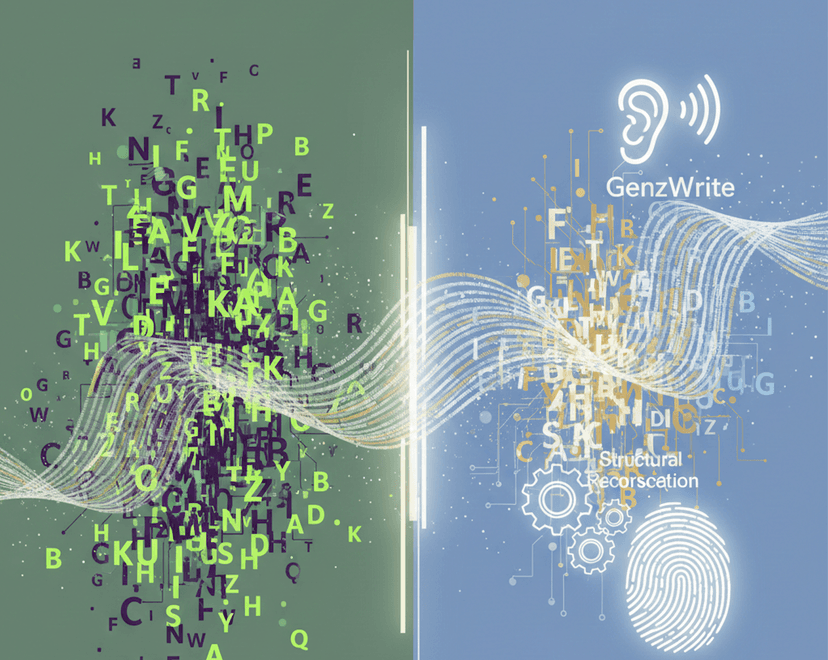
The Definitive Guide to AI Humanization in 2026: GenZWrite vs. the Top 6 Tools
Discover the best AI humanizers of 2026. We compare GenZWrite against Phrasly, Humbot, and StealthWriter, Quillbot based on structural variety, tone control, and bypass reliability. Learn why structural reconstruction—not just synonym swapping—is the key to undetectable, professional writing this year
GenZWrite
GenZWrite official

The Best AI Humanizer for Turnitin in 2026
Turnitin doesn’t just look for "AI words"—it tracks the statistical fingerprint of your writing. In 2026, simple synonym swaps no longer work. This guide reveals the data-driven way to humanize your essays, bypass "burstiness" checks, and protect your academic reputation with tools that actually work.
GenZWrite
GenZWrite official
Humanize & Detect AI
Transform robotic AI text into natural, engaging content that passes detection and ranks higher.